Best Time to Clean Solar Panels in Summer (Australia)
When to clean your solar panels during summer for maximum efficiency. Morning vs afternoon timing, temperature impacts, and seasonal cleaning schedules for Australian conditions.
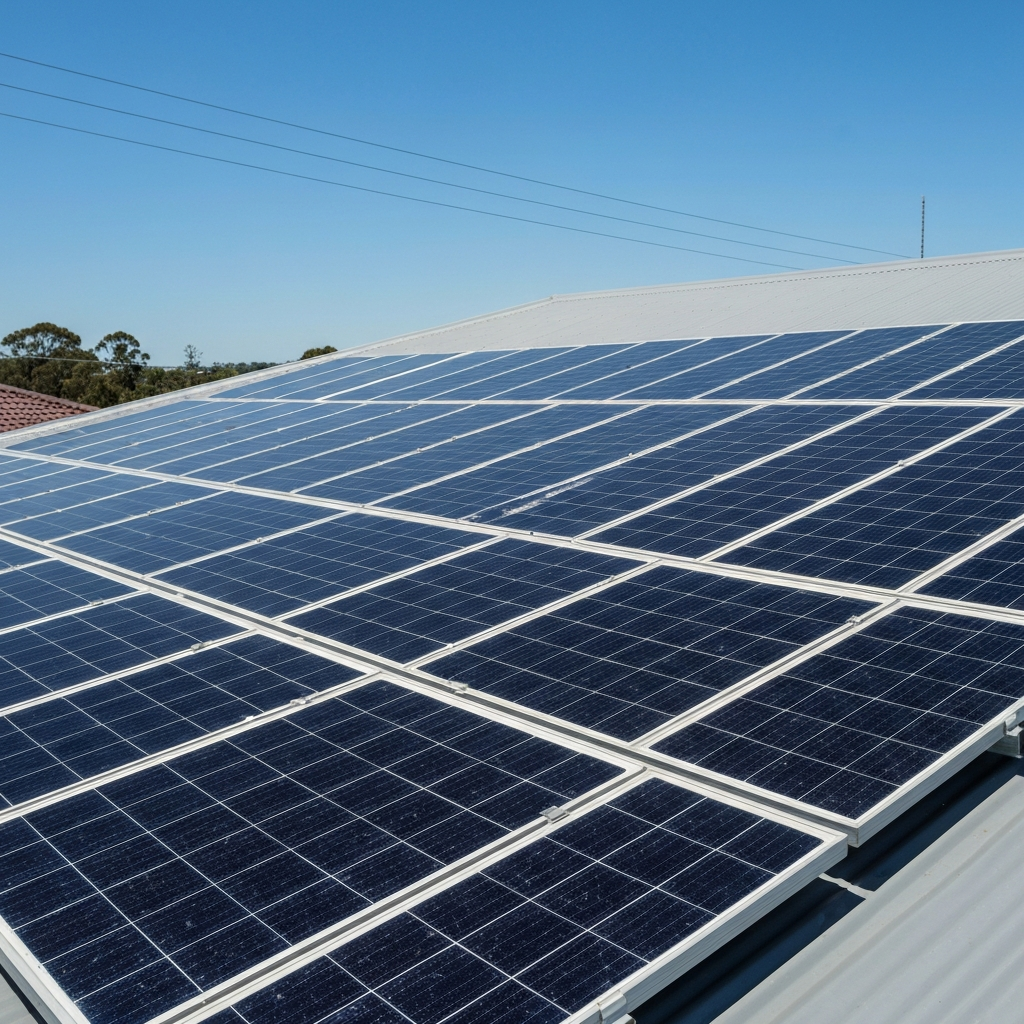
Summer in Australia brings long daylight hours and maximum solar generation potential — but it’s also when your panels accumulate the most dust, pollen, and grime. Cleaning at the wrong time can damage your system or deliver poor results. This guide covers exactly when to clean solar panels during summer for optimal safety, efficiency, and results.
Why Summer Timing Matters for Solar Panel Cleaning
Summer cleaning isn’t just about removing dirt — it’s about timing the job when panels are safe to touch, water works effectively, and you maximise the return on your cleaning effort.
During Australian summer, rooftop solar panels regularly reach surface temperatures between 65-85°C during peak sunshine (Source: CSIRO Energy, 2023). Applying cold water to panels this hot creates thermal shock, potentially causing microcracks in photovoltaic cells that permanently reduce output.
Panel temperature isn’t the only concern. Water evaporates in seconds on hot surfaces, leaving mineral deposits and soap residue that actually reduce efficiency rather than improve it. This is particularly problematic in areas with hard water like Adelaide, Perth, and parts of Queensland.
Summer also brings specific contaminants: bushfire smoke residue across NSW and Victoria, dust storms in inland areas, and higher pollen counts that create sticky films on glass surfaces. Timing your clean around these seasonal factors determines how effective your maintenance will be.
Best Time of Day to Clean Solar Panels in Summer
The optimal window for cleaning solar panels in summer is early morning between 6:00am and 8:00am, before ambient temperatures climb above 25°C.
At dawn, panel surface temperatures typically sit between 15-25°C — cool enough to prevent thermal shock but warm enough that frost isn’t an issue. The morning dew can actually help soften dried bird droppings and dust, making your cleaning more effective with less scrubbing.
Your second-best option is late afternoon or early evening, after 5:00pm when panels have begun cooling but there’s still enough light to see what you’re doing. By this time, surface temperatures have typically dropped below 40°C, making them safe to clean.
Never clean solar panels between 10:00am and 3:00pm during summer. This is when panel temperatures peak, thermal shock risk is highest, and water evaporates too quickly to rinse properly. The Australian Photovoltaic Institute records show that cleaning during peak heat is the second-most common cause of homeowner-inflicted panel damage (Source: APVI, 2024).
If you’re working on a two-storey roof in direct sun, consider that roof tile temperatures can exceed 70°C by midday, making ladders and surfaces dangerously hot to touch regardless of when you start.
Temperature Guidelines for Safe Summer Cleaning
Understanding temperature thresholds keeps both you and your panels safe.
Safe cleaning temperatures:
- Panel surface: below 40°C (ideal below 30°C)
- Ambient air: below 30°C
- Water temperature: close to ambient (15-25°C)
Dangerous conditions:
- Panel surface: above 60°C
- Ambient air: above 35°C
- Temperature differential: water more than 30°C cooler than panels
You can estimate panel temperature without specialised equipment: if you can comfortably hold your hand on the panel frame for 5 seconds, it’s probably cool enough to clean. If you can’t touch it for more than 2 seconds, it’s too hot.
Melbourne residents typically have a longer safe cleaning window during summer (panels stay cooler due to more variable weather), while Brisbane and Darwin homeowners need to clean very early or wait until after sunset during the hottest months.
For professional context on handling extreme conditions, consider reading about professional solar panel cleaning approaches which include temperature monitoring equipment.
Monthly Timing: When to Schedule Summer Cleans
December through February are Australia’s peak solar generation months, but they’re not all equal for cleaning timing.
November (pre-summer clean): This is the single most valuable time to clean your panels. You remove winter pollen and prepare for maximum summer generation. Your system delivers peak output through December and January when electricity usage (and savings) are highest.
December: Only clean if output monitoring shows significant drop (>15%) or after specific events like dust storms. Most systems cleaned in November don’t need attention yet.
January: Mid-summer check. If you’re in high-dust areas like Western Sydney, Penrith, or Adelaide’s northern suburbs, this might be when you need a second clean. Otherwise, wait.
February (late-summer clean): Many homeowners schedule their second annual clean now, removing accumulated summer grime before autumn. This clean sets you up for good performance through the milder generation months.
March: Technically autumn, but still warm enough for morning cleaning. Good timing if you’re moving to a twice-yearly schedule.
In tropical areas like Cairns and Darwin, the “summer” pattern shifts to align with dry season (May-October), when panels stay cleaner and temperatures are more manageable for safe cleaning.
Weather Conditions to Avoid
Even at the right time of day, certain weather conditions make summer cleaning dangerous or ineffective.
Don’t clean when:
- Wind speed exceeds 30 km/h: Creates instability on ladders and blows cleaning solution into your eyes
- Storm forecast within 6 hours: Getting caught on a roof during lightning is potentially fatal
- Humidity below 30%: Water evaporates too quickly for effective rinsing, common in inland areas during heatwaves
- Recent rain (within 2 hours): Roof surfaces are slippery; wait for tiles to dry
- Heatwave conditions: Any day forecast above 38°C should be avoided entirely
Ideal conditions:
- Calm wind (<15 km/h)
- Ambient temperature 18-28°C
- Moderate humidity (40-70%)
- Overcast or early morning conditions
- No rain forecast for 4+ hours
Perth residents should watch for Fremantle Doctor afternoon winds that can arrive suddenly. Brisbane and Sydney coastal homeowners benefit from sea breezes that provide cooler late-afternoon conditions ideal for summer cleaning.
How Summer Affects Cleaning Frequency
Most Australian solar systems need cleaning 1-2 times per year, but summer conditions can change that schedule.
Standard residential systems in suburban areas typically follow this pattern:
- Pre-summer clean (November)
- Post-summer clean (February or March)
You may need additional summer cleaning if:
- You live within 5km of active construction or unpaved roads
- Your property backs onto farmland (harvest dust)
- Bushfire smoke has affected your area
- Bird activity has increased (nesting season)
- A dust storm or unusual weather event has occurred
Properties in Canberra, Hobart, and alpine regions may only need annual cleaning because cooler average temperatures mean less dust becomes airborne and stuck to panels.
Monitor your system’s output through the SolarEdge, Enphase, or Fronius app. If generation drops >15% compared to the previous week (after accounting for weather), inspection and possible cleaning are warranted.
If you’re uncertain whether cleaning frequency impacts costs significantly, this guide on solar panel cleaning costs breaks down when professional service makes financial sense versus DIY approaches.
Regional Australian Summer Cleaning Considerations
Australia’s climate diversity means summer cleaning timing varies by location.
Sydney and NSW Coast: Early morning (6:30-8am) before humidity climbs. Watch for westerly winds bringing dust from inland areas. Clean before major dust events if forecast, or immediately after.
Melbourne and Victoria: More flexible timing due to cooler summer peaks. Can often clean safely until 9am. Spring cleaning (October-November) particularly valuable before summer heat.
Brisbane and Queensland: Very early morning essential (6-7am). By 8am, temperatures can already be uncomfortable. Consider wet season timing (December-March) when afternoon storms clean panels naturally.
Perth and Western Australia: Consistent dry heat means strict early morning schedule. 6-7:30am ideal. The Fremantle Doctor provides afternoon cooling but creates ladder instability.
Adelaide and South Australia: High dust exposure requires 2-3 summer cleans in northern suburbs. Early morning critical due to rapid temperature rise. Watch for dust storms from inland areas.
Darwin and Tropical North: Wet season (November-April) provides natural cleaning, but panels need checking for mould and moisture residue. Clean during dry season (May-October) when temperatures are safer.
Pre-Cleaning Preparation for Summer Safety
Before you start cleaning solar panels in summer heat, proper preparation prevents accidents and damage.
24 hours before:
- Check weather forecast for temperature, wind, and storms
- Inspect equipment (extension poles, brushes, hose connections)
- Test water purity if using tap water (TDS <50ppm ideal)
- Notify household members of your schedule
- Ensure phone is charged for emergencies
Morning of:
- Check panel surface temperature (touch test)
- Set up ladder on stable, level ground
- Position spotter if working above ground level
- Wear closed-toe shoes with grip (never work barefoot or in thongs)
- Apply sunscreen and wear hat even in early morning
Water preparation:
- Let hose run 30 seconds to clear hot water that’s been sitting in the line
- Use temperature-adjusted water (lukewarm, not cold, on warm panels)
- Have 2x the water volume you think you’ll need
- Keep cleaning solution in shade so it doesn’t overheat
For comprehensive safety protocols that go beyond summer-specific concerns, consult detailed DIY solar panel cleaning safety guidelines covering all conditions and scenarios.
Signs You’ve Chosen the Wrong Cleaning Time
Sometimes you start cleaning and realise conditions aren’t suitable. These warning signs mean you should stop immediately.
Stop cleaning if:
- Water is evaporating before you can rinse properly
- Panel frames are too hot to touch comfortably
- You feel dizzy, nauseous, or overheated
- Wind picks up unexpectedly
- Dark clouds appear (storm risk)
- Panels make cracking or popping sounds (thermal stress)
- Your ladder becomes unstable
- Visibility decreases due to glare or changing light
It’s better to reschedule than to push through unsafe conditions. Professional cleaners regularly postpone jobs due to weather — homeowners should follow the same precautions.
If you abandon a partial clean, rinse panels lightly with pure water to remove any soap residue, then return the next morning at an earlier time to complete the job.
Professional Cleaning vs DIY Summer Timing
Professional solar panel cleaners have advantages when it comes to summer timing flexibility.
Professional advantages:
- Start earlier (5:30-6am) to beat heat
- Have temperature monitoring equipment
- Access to deionised water systems that rinse faster
- Insurance coverage for thermal shock damage
- Experience recognising unsafe conditions
DIY advantages:
- Can monitor weather hour-by-hour and act on perfect windows
- Familiarity with your specific roof and panel layout
- No waiting for appointment availability
- Lower cost for households on tight budgets
For most homeowners, DIY summer cleaning works well for accessible single-storey systems when you follow temperature and timing guidelines. Two-storey homes or complex roof layouts typically justify professional service regardless of season.
If you’re weighing whether professional service is worth the investment specifically during challenging summer conditions, comparing professional service costs against safety risks often clarifies the decision.
Summer Cleaning Mistakes to Avoid
Even with good timing, certain mistakes can damage panels or reduce cleaning effectiveness.
Common summer errors:
- Using cold water on hot panels: Causes thermal shock and microcracks
- Cleaning in full sun: Water evaporates too fast, leaves mineral deposits
- Using high-pressure washers: Can force water behind seals and damage cells
- Adding detergent not designed for solar: Leaves residue that attracts more dirt
- Scrubbing too hard: Scratches anti-reflective coating on panel glass
- Working alone on two-storey roofs: No one to call for help in emergency
Less obvious mistakes:
- Starting cleaning at 7am when forecast shows rapid temperature rise by 8am
- Not adjusting schedule for panel orientation (north-facing panels heat faster)
- Cleaning only visible panels and missing sections shaded by trees
- Using town water without checking mineral content (TDS)
- Not rinsing panels after storm exposure to remove salt or ash before proper cleaning
The difference between effective summer cleaning and damaged panels often comes down to these timing and technique details.
Maximising Summer Generation After Cleaning
Once you’ve cleaned at the optimal time, a few follow-up steps ensure you get maximum benefit.
Immediately after cleaning:
- Check system monitoring app for output improvement within 1-2 hours
- Photograph panels to document clean state
- Note any damaged cells or cracks discovered during cleaning
- Log cleaning date in maintenance records
Within 1 week:
- Compare daily generation to pre-clean baseline (expect 10-25% improvement)
- Monitor for streaking or residue that indicates water quality issues
- Check if bird activity returns (may need deterrents installed)
Within 1 month:
- Assess whether cleaning frequency needs adjustment based on how quickly panels get dirty again
- Consider gutter cleaning if debris is falling onto panels
- Evaluate if tree trimming would reduce pollen and bird problems
Most homeowners see cleaning benefits persist for 3-6 months in suburban areas, or 1-3 months in high-dust rural areas. Your system monitoring data will show exactly when the next clean becomes financially worthwhile.
When to Call Professionals Instead
Some summer situations call for professional cleaning regardless of your DIY capability.
Call professionals when:
- Temperatures consistently exceed 35°C during morning hours
- Heatwave warnings are active in your area
- You’ve never cleaned panels before and want to learn correct technique first
- Panels are on a steep pitch roof (>25 degrees)
- You’re over 60 or have mobility concerns
- Recent storm damage needs inspection alongside cleaning
- System is showing electrical faults or unusual behaviour
Professional services typically charge $150-400 depending on system size and access difficulty, and they carry insurance that covers heat-related damage — a worthwhile investment during extreme summer conditions.
Many professionals also offer summer-specific scheduling where they work very early (starting at 5:30am) to ensure safe panel temperatures, something difficult for most homeowners to coordinate.
Long-Term Summer Maintenance Strategy
Effective summer cleaning is part of a year-round maintenance approach that maximises your system’s 25-year lifespan.
Annual schedule:
- Spring (September-October): Post-winter clean to remove pollen and prepare for summer
- Summer (November or December): Pre-peak generation clean for maximum output
- Late summer (February): Second clean if in high-dust area or after bushfires
- Autumn (April-May): Post-summer assessment and clean if needed
- Winter (June-August): Monitor only unless significant performance drop
Monitoring between cleans:
- Check output weekly via monitoring app
- Photograph panels monthly from ground level (use phone zoom)
- Note weather events (dust storms, nearby fires, hail)
- Track electricity bills to correlate generation with savings
This schedule ensures you’re cleaning when it provides maximum financial benefit while avoiding damage from incorrect timing or technique.
Combined with proper bird proofing measures to prevent nesting that compounds summer dirt buildup, strategic timing delivers both safety and optimal system performance year after year.
Frequently Asked Questions
What time of day should I clean solar panels in summer?
Early morning (6-8am) or late afternoon (after 5pm) are ideal. Panels are cooler, water evaporates slower, and you avoid thermal shock that can damage cells. Never clean during peak heat (10am-3pm) when panel temperatures exceed 65°C.
Can I clean solar panels in 40-degree heat?
No. Cleaning solar panels when ambient temperature exceeds 35°C risks thermal shock damage. Cold water on panels reaching 70-80°C can crack cells. Wait until evening when panels have cooled to below 40°C surface temperature.
How often should I clean solar panels during Australian summer?
Most Australian systems need cleaning once during summer (December-February), or twice if you’re in high-dust areas like Western Sydney, Adelaide Hills, or near bushfire zones. Monitor output weekly to identify when cleaning is needed.
Is morning or afternoon better for cleaning solar panels?
Morning (6-8am) is slightly better. Panels are coolest after overnight temperatures, dew can soften grime, and you get a full day of improved generation. Afternoon works if mornings aren’t practical, but wait until after 5pm.
Should I clean solar panels before or after summer?
Clean in early summer (November) before peak generation months, and again in late summer (February) if needed. Pre-summer cleaning captures maximum generation during long daylight hours when electricity savings are highest.
Can I clean solar panels on a cloudy summer day?
Yes — cloudy days are actually ideal for summer cleaning. Panels stay cooler, water doesn’t evaporate as quickly, and there’s no thermal shock risk. Just ensure rain isn’t forecast within 4 hours of starting.
What temperature is too hot to clean solar panels?
Don’t clean if ambient temperature exceeds 35°C or if panel surface temperature is above 40°C. These conditions create thermal shock risk and cause water to evaporate before rinsing properly, leaving mineral deposits.
Do I need different cleaning products in summer?
No — use the same pH-neutral solar panel cleaning solution year-round. However, you may need slightly more solution in summer to compensate for faster evaporation, and ensure it’s stored in shade so it doesn’t overheat.
Sources
- CSIRO Energy Research — Solar panel temperature studies and thermal performance data
- Australian Photovoltaic Institute — Solar system performance monitoring and maintenance research
- Clean Energy Council — Solar panel maintenance guidelines and installer standards
- Bureau of Meteorology — Australian climate data and seasonal weather patterns
- Standards Australia — AS/NZS 5033:2021 solar installation standards including maintenance protocols
Frequently Asked Questions
Early morning (6-8am) or late afternoon (after 5pm) are ideal. Panels are cooler, water evaporates slower, and you avoid thermal shock that can damage cells. Never clean during peak heat (10am-3pm) when panel temperatures exceed 65°C.
No. Cleaning solar panels when ambient temperature exceeds 35°C risks thermal shock damage. Cold water on panels reaching 70-80°C can crack cells. Wait until evening when panels have cooled to below 40°C surface temperature.
Most Australian systems need cleaning once during summer (December-February), or twice if you're in high-dust areas like Western Sydney, Adelaide Hills, or near bushfire zones. Monitor output weekly to identify when cleaning is needed.
Morning (6-8am) is slightly better. Panels are coolest after overnight temperatures, dew can soften grime, and you get a full day of improved generation. Afternoon works if mornings aren't practical, but wait until after 5pm.
Clean in early summer (November) before peak generation months, and again in late summer (February) if needed. Pre-summer cleaning captures maximum generation during long daylight hours when electricity savings are highest.