DIY Solar Panel Cleaning Risks — What Can Go Wrong
Before you grab a ladder and a bucket, read this. The risks of DIY solar panel cleaning in Australia — from roof falls to voided warranties.
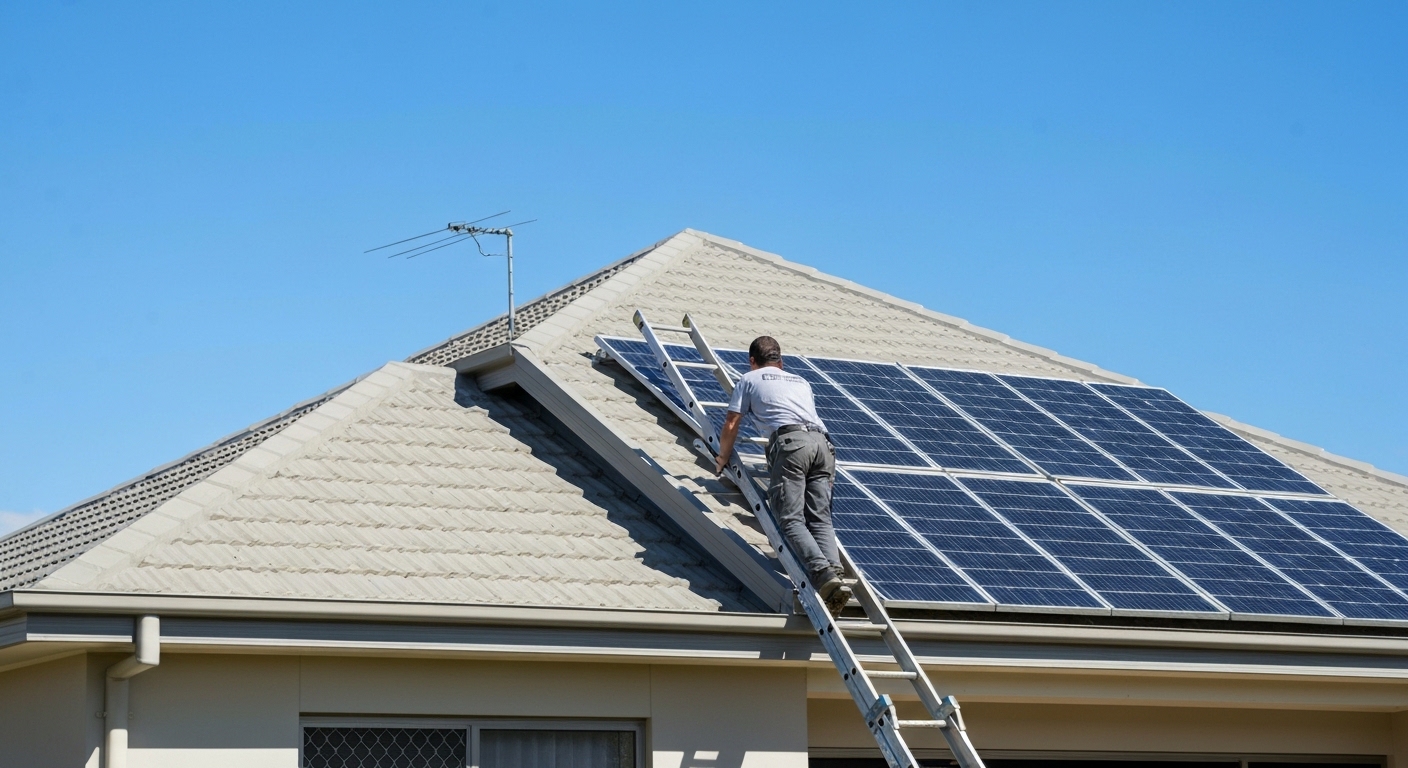
There’s an appealing logic to cleaning your own solar panels. You’re already paying for cleaning chemicals for the rest of the house. You have a ladder. The panels are right there. How hard can it be?
Harder than it looks — and riskier than most homeowners realise. This guide covers the genuine DIY solar panel cleaning risks so you can make an informed decision before you climb up there.
Risk #1: Falls and Physical Injury (Most Serious)
Falls from rooftops are one of Australia’s leading causes of serious home injury. Safe Work Australia reports that falls from height account for over 22% of serious workplace injuries in construction. Residential rooftops share many of the same hazards.
The specific DIY solar panel cleaning risks when working at height:
- Wet surfaces — water from cleaning makes roof tiles extremely slippery. Terracotta and glazed tiles become ice-like when wet.
- Distraction — handling a hose, brush, or bucket while navigating a pitch reduces balance and awareness.
- Overconfidence — most falls happen to people who have “done this before without issue”.
- Fatigue — a 6.6 kW system takes 60–90 minutes to clean properly. That’s a long time to maintain safe footing.
Professional cleaners operate under Safe Work Australia height safety requirements. They use harnesses, roof anchors, and safety footwear. For a $220 professional clean, you’re also buying that safety infrastructure.
Our position: If your panels require you to step onto a pitched roof surface, or if your home is two storeys, hire a professional. Full stop.
Risk #2: Using the Wrong Water
This is the most common DIY mistake. It costs thousands in long-term efficiency loss.
Tap water contains dissolved minerals — calcium, magnesium, and silica. When tap water evaporates on panel glass (which happens very quickly in Australian summer heat), it leaves behind a white mineral residue. This residue:
- Creates a permanent hazy film on the anti-reflective coating
- Attracts more dust and grime (rough surface = better dust adhesion)
- Is extremely difficult to remove without professional equipment
- Compounds with each successive tap-water clean
The effect over 2–3 years of tap water cleaning can be worse than never cleaning at all. This is one of the most overlooked DIY solar panel cleaning risks.
What to use instead: Deionised or purified water. Professional cleaners use water purification systems. TDS meters confirm quality below 10–20 ppm. You can purchase deionised water from car parts stores (sold for battery top-up). But the volume required for a full system clean makes this impractical for most homeowners.
Risk #3: Using the Wrong Cleaning Products
Walk the cleaning aisle of any hardware store and you’ll find products that look right but are wrong for solar panels. Understanding which products damage panels is crucial when considering DIY solar panel cleaning risks.
| Product | Problem |
|---|---|
| Dish soap / washing-up liquid | Leaves a surfactant film that attracts dust |
| Window cleaner (Windex etc.) | Contains ammonia — damages anti-reflective coating |
| Citrus degreasers | Acidic — can etch glass surface over time |
| Car wax / sealants | Creates uneven coating that traps grime |
| Bleach or mould removers | Chemical damage to cells and frame seals |
| Isopropyl alcohol | Safe on small areas, impractical for full system |
The only acceptable cleaning agent for solar panels: pure water (ideally deionised), or a small amount of purpose-made solar panel cleaning solution (pH neutral, surfactant-free).
Risk #4: Pressure Washing Damage
A pressure washer seems like an efficient solution. Blast the dirt off quickly from ground level. This is one of the most damaging things you can do to solar panels.
Why pressure washing destroys panels:
- Micro-crack damage — the cells inside solar panels are approximately 0.2mm thick wafers of silicon. High-pressure water causes vibration and mechanical stress. This creates micro-cracks invisible to the naked eye. These cause “hotspots” — localised overheating — and permanently reduce output.
- Water ingress — panels are sealed against normal moisture, not against high-pressure jets. Forcing water under frame seals leads to moisture getting into the panel laminate. This causes delamination and cell corrosion.
- Warranty void — virtually every panel manufacturer warranty explicitly excludes damage caused by high-pressure cleaning. A pressure washer clean that causes delamination will leave you with a $500–$1,500 repair bill and no warranty protection.
See our dedicated article on pressure washing and warranty risks for full details.
Risk #5: Thermal Shock
Cleaning cold panels with warm water, or warm panels with cold water, creates thermal shock. This means rapid temperature differentials that stress the glass and cell connections.
Australian panels in summer can reach surface temperatures of 60–80°C during peak generation. Dousing them with cold hose water creates an instantaneous temperature differential of 40–50°C. This is enough to cause:
- Micro-cracks in cell interconnects
- Frame seal stress
- Anti-reflective coating delamination
The rule: only clean panels when they’re cool — early morning before generation, or after sunset. Never clean hot panels.
Risk #6: Electrical Hazards
Solar panels generate electricity whenever light hits them — including during cleaning. Australian safety standards are clear: cleaning should not be performed during active generation without proper isolation procedures.
Key electrical risks:
- Water conducts electricity. If your panels have any damaged wiring, weathered cable clips, or compromised junction boxes, water contact during cleaning creates shock risk.
- Incorrect cleaning techniques can damage junction box seals. This creates ongoing moisture ingress points.
Professional cleaners are trained to identify these hazards. If you’re cleaning yourself, inspect for any visible cable damage before starting. Ideally clean outside generation hours.
Risk #7: Warranty Violations
Most solar panel manufacturers have specific cleaning requirements in their warranty terms. According to the Clean Energy Council, improper maintenance is one of the top three reasons for warranty claim rejection in Australia.
Common warranty violations include:
- Using abrasive materials or scrubbing pads
- Applying chemical cleaners not approved by the manufacturer
- Pressure washing above 25 bar
- Walking on panels or applying point loads
- Cleaning during peak sun hours (some manufacturers specify)
Before attempting DIY solar panel cleaning, check your warranty documentation. If you can’t find it, contact your installer or the panel manufacturer directly.
Risk #8: Incomplete Cleaning and Bird Waste
Bird droppings contain uric acid. Left on panels, it etches the glass surface permanently. DIY cleaners often miss:
- Droppings under panel edges
- Accumulated waste in panel gaps
- Bird nesting materials in mounting gaps
- Lichen growth around frame edges
Professional cleaners use inspection techniques to identify these issues. They can also recommend bird deterrent systems if needed. The CSIRO notes that bird-related soiling is responsible for up to 35% of efficiency loss in some urban areas.
When DIY Is Acceptable
Despite the DIY solar panel cleaning risks, self-cleaning is reasonable in specific circumstances:
✅ DIY is acceptable when:
- Ground-mounted panels (no height risk)
- Single-storey with safe, flat roof access and proper safety footwear
- Using purified/deionised water and a soft-bristle brush
- Panels are cool (early morning or after sunset)
- No visible panel damage, cracked cells, or exposed wiring
- You’re physically comfortable at height and have a spotter
❌ Always hire a professional when:
- Two-storey home or elevated roof
- Steep pitch (over 25°)
- Panels show bird dropping accumulation or lichen growth
- Last clean was 2+ years ago (heavy soiling requires pressure and technique)
- You’re unsure about any of the above
The Real Cost Comparison
| Factor | DIY | Professional |
|---|---|---|
| Direct cost | ~$40–$80 (equipment + water) | ~$180–$280 |
| Time | 2–4 hours | 0 (you’re not there) |
| Safety risk | Moderate–high (roof) | Low |
| Quality | Variable | Consistent, purified water |
| Warranty risk | Moderate | None |
| Long-term mineral buildup | High (if using tap water) | Zero |
For most homeowners, the professional clean is better value when you account for time, safety, and the long-term cost of tap water mineral damage.
DIY vs. Professional: A Practical Comparison
To help you decide, here’s an honest side-by-side comparison:
| Factor | DIY | Professional |
|---|---|---|
| Cost | $0 (+ equipment) | $150–$350 |
| Water quality | Variable (tap water risks) | Deionised — zero residue |
| Safety | Self-managed risk | Licensed, insured |
| Roof inspection | Basic check | Full array inspection |
| Bird activity check | Unlikely | Usually included |
| Warranty compliance | Depends on products used | Yes (reputable operators) |
| Time required | 60–120 min | 30–60 min |
| Best for | Single-storey, accessible, tech-savvy | 2-storey, hard access, warranty-sensitive |
The honest DIY case: If you have a single-storey home with accessible panels, you’re comfortable with roof safety, you have deionised water, and you’re cleaning during cool morning hours — DIY is entirely reasonable and cost-effective done twice a year.
The professional case: Any of these conditions make professional cleaning the better choice — two-storey home, steep roof, panels under manufacturer warranty, hard water area, or you’re not confident about roof safety.
Common DIY Cleaning Mistakes to Avoid
To close the loop, here are the specific mistakes that cause damage — and what to do instead:
Mistake: Cleaning in midday summer heat Why it’s a problem: Panel surface temperature can reach 65–75°C. Cold tap water causes thermal shock. This can crack the glass or damage the anti-reflective coating micro-structure. What to do instead: Clean before 9am or after 4pm, or on overcast days.
Mistake: Using a pressure washer at standard settings Why it’s a problem: 80–120 bar pressure forces water past rubber gaskets. This causes delamination and moisture damage to wiring over time. What to do instead: Use a garden hose on the gentlest setting, or a water-fed brush pole.
Mistake: Walking on or leaning across panels Why it’s a problem: Cracked cells, broken glass, and voided warranties. What to do instead: Use a long-handled brush pole from beside the panels — never step on them.
Mistake: Using glass cleaner, bleach, or detergent in excess Why it’s a problem: Leaves chemical residue that attracts dust, or damages seals and coatings. What to do instead: One drop of mild dish soap per 4 litres of DI water if needed. Rinse completely.
Mistake: Ignoring what you see during cleaning Why it’s a problem: Wiring issues, loose mounts, and growing bird infestations are all visible during a clean. Missing them delays action. What to do instead: Take 5 minutes to inspect while you’re there. Look for exposed wiring, loose clips, bird droppings patterns that suggest nesting below.
Conclusion
DIY solar panel cleaning is not inherently dangerous — but it requires the right conditions, equipment, and technique. The most common mistakes (tap water, pressure washers, wrong products, cleaning hot panels) cause damage that’s more expensive to fix than the clean would have cost in the first place.
Understanding these DIY solar panel cleaning risks helps you make an informed choice. If you’re going to DIY: use deionised water, a soft brush, clean early morning, stay safe on the roof, and stop if anything feels uncertain.
If in doubt: the $220 professional clean is an investment, not a cost.
Sources
-
Safe Work Australia (2024). “Work Health and Safety Statistics: Falls from Height in Construction and Residential Settings.” Australian Government. safeworkaustralia.gov.au
-
Clean Energy Council (2024). “Solar PV System Maintenance Guidelines and Warranty Compliance.” Clean Energy Council Australia. cleanenergycouncil.org.au
-
CSIRO (2023). “Solar Panel Soiling and Efficiency Loss Study: Australian Environmental Factors.” Commonwealth Scientific and Industrial Research Organisation. csiro.au
-
Australian/New Zealand Standard AS/NZS 5033:2021. “Installation and Safety Requirements of Photovoltaic Arrays.” Standards Australia.
Related: How to Clean Solar Panels Safely · Pressure Washing Solar Panels · Solar Panel Warranty Cleaning Requirements
Frequently Asked Questions
Is it safe to clean solar panels yourself?
It can be, but only under specific conditions: single-storey home, safe roof access, correct products, and no wet or windy conditions. For multi-storey homes or steep roofs, professional cleaning is strongly recommended.
What should I never use to clean solar panels?
Never use tap water (leaves mineral deposits), pressure washers (voids warranty, cracks cells), abrasive scrubbing pads, dish soap or detergents (leaves residue), or Windex/glass cleaners (chemical damage to anti-reflective coating).
Can DIY cleaning void my solar panel warranty?
Yes. Using incorrect cleaning products, high-pressure water, or abrasive materials can void panel warranties. Most manufacturers specify purified or deionised water and soft brushes as the only acceptable cleaning method.
What equipment do I need to clean solar panels safely at home?
At minimum: deionised or distilled water (20–30 litres), a soft-bristle brush with an extended handle to reach panels from ground level or gutterline, a microfibre cloth for finishing, and appropriate roof safety equipment if roof access is required. Never clean panels with tap water alone.
Frequently Asked Questions
It can be, but only under specific conditions: single-storey home, safe roof access, correct products, and no wet or windy conditions. For multi-storey homes or steep roofs, professional cleaning is strongly recommended.
Never use tap water (leaves mineral deposits), pressure washers (voids warranty, cracks cells), abrasive scrubbing pads, dish soap or detergents (leaves residue), or Windex/glass cleaners (chemical damage to anti-reflective coating).
Yes. Using incorrect cleaning products, high-pressure water, or abrasive materials can void panel warranties. Most manufacturers specify purified or deionised water and soft brushes as the only acceptable cleaning method.
At minimum: deionised or distilled water (20–30 litres), a soft-bristle brush with an extended handle to reach panels from ground level or gutterline, a microfibre cloth for finishing, and appropriate roof safety equipment if roof access is required. Never clean panels with tap water alone.