Solar Bird Proofing in Australia — The Complete Guide
How to stop pigeons and other birds from nesting under your solar panels. Costs, methods, and what actually works in Australian conditions.
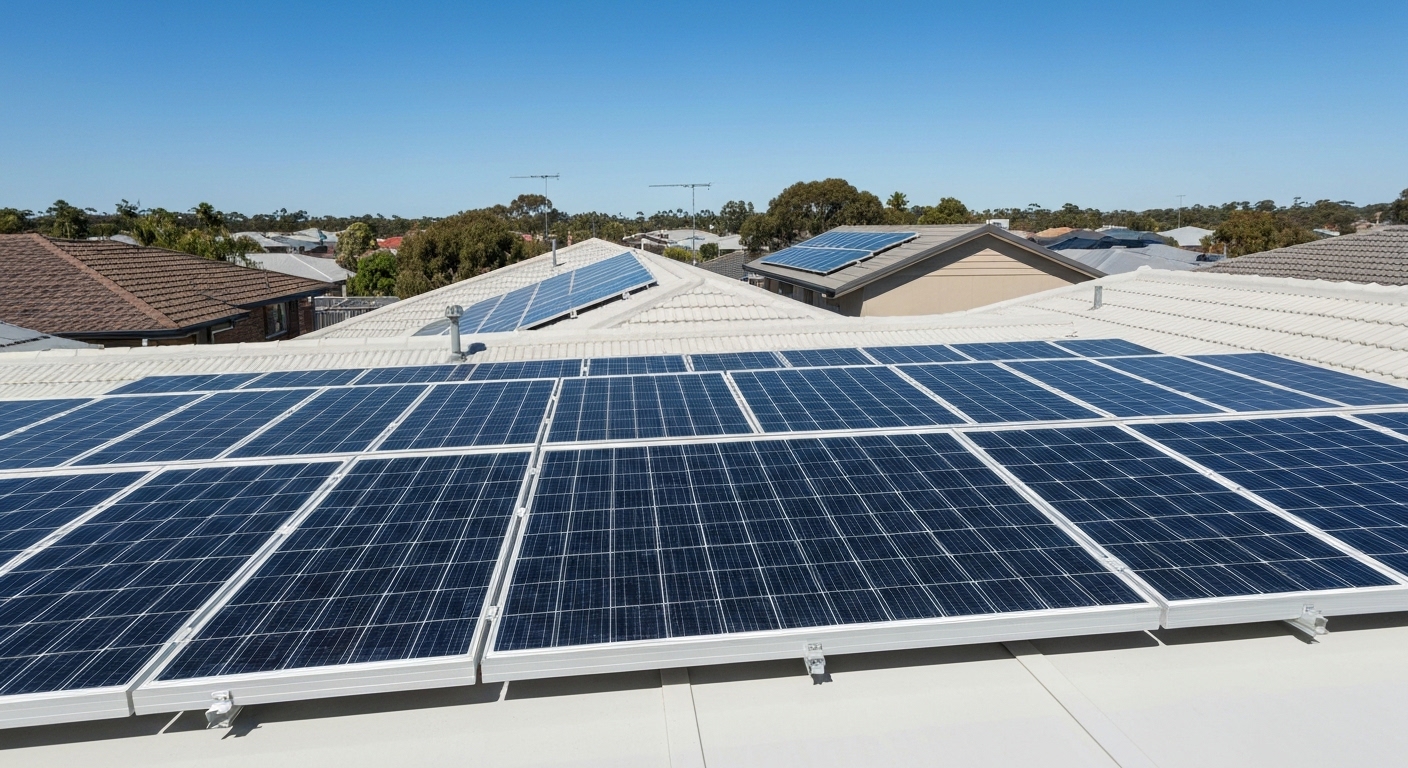
If you’ve heard scratching, cooing, or fluttering from your roof — especially near your solar panels — you likely have birds nesting underneath them. In Australia, pigeons and Indian mynas are the most common culprits, but starlings, sparrows, and even possums use the warm, sheltered space beneath solar panels as prime real estate.
This guide covers everything Australian homeowners need to know about solar bird proofing: why it matters, what methods work, what to avoid, and how much it costs.
Why Birds Under Solar Panels Are a Serious Problem
Most homeowners assume birds under panels are just noisy and annoying. The reality is significantly worse:
Output Loss
Bird droppings on panel surfaces cause hotspot shading — a disproportionate reduction in output relative to the surface area covered. A single large dropping can reduce output of an entire string by 10–20% due to the way series-connected panels work.
Physical Damage
- Nesting materials (twigs, leaves, feathers) trap moisture against panel backing
- Bird urine is highly acidic and can corrode aluminium frames over time
- Some birds (particularly cockatoos) actively peck at wiring conduits and cable clips
- Nesting can block airflow under panels, causing thermal stress and accelerating degradation
Warranty Implications
Most panel manufacturers explicitly state that damage caused by animal nesting is not covered under product warranty. This includes micro-crack damage from moisture trapped under nesting material and wiring damage from birds.
Fire Risk
Dry nesting materials — particularly gum leaves, dry grass, and bark — accumulate under panels and present a genuine fire risk during summer. This is especially relevant in Victoria, NSW, and SA during bushfire season.
The Most Common Birds Causing Problems in Australia
| Bird | States Most Active | Primary Problem |
|---|---|---|
| Feral pigeon | All states, esp. metro | Nesting + droppings |
| Indian myna | QLD, NSW, VIC | Aggressive nesting |
| Common starling | VIC, NSW, TAS | Dense nesting materials |
| House sparrow | All states | Nesting in frame gaps |
| Cockatoo (various) | NSW, VIC, QLD | Wire/cable pecking |
| Rainbow lorikeet | QLD, NSW, WA | Droppings + noise |
Bird Proofing Methods: Ranked
1. Mesh and Clip Systems (Best)
How it works: Galvanised, UV-stabilised steel mesh is attached to panel frames using purpose-made plastic or steel clips. The mesh runs around the perimeter of the entire array, closing off the gap between panels and roof.
Why it works: Complete exclusion — birds physically cannot access the under-panel space. No deterrent that wears off, no maintenance, no re-baiting.
Cost: $300–$600 for a 6.6 kW system (installed)
Longevity: 10–15 years with quality mesh and clips
Warranty safe: Yes, when installed by qualified professionals using non-drilling clip systems
Our recommendation: This is the only method we recommend for permanent resolution.
2. Spikes and Strips (Good for Edges)
How it works: Polycarbonate or stainless steel spikes placed along panel edges and roof ridgelines prevent birds from landing and roosting.
Why it works: Effective at preventing landing, but doesn’t prevent birds from entering from below or through gaps in the array.
Cost: $150–$300 installed, depending on linear metres
Best for: Supplementary protection, or where mesh isn’t suitable
3. Deterrent Tape and Flash Tape (Poor)
Reflective flash tape may deter birds initially, but Australian birds — particularly pigeons and mynas — habituate quickly. Effectiveness drops to near zero within 4–8 weeks.
Not recommended as a primary solution.
4. Fake Owls and Predator Silhouettes (Poor)
Plastic owl decoys and hawk kites are sold widely at hardware stores. Like tape, they work for a few weeks then become ignored furniture on your roof.
Research from the CSIRO confirms that static visual deterrents have no long-term effect on habituated urban bird populations. See our full fake owl analysis for more detail.
Not recommended.
5. Ultrasonic Devices (No Evidence)
Electronic ultrasonic repellers that claim to deter birds via sound have no credible scientific evidence supporting their effectiveness against feral pigeons or mynas. They may affect some wildlife species that you’d prefer to keep. Avoid.
What a Professional Bird Proofing Job Involves
A reputable solar bird proofer should:
- Inspect and clear existing nests — removing nesting material and sanitising the area with a bird-safe disinfectant
- Inspect wiring for any bird-related damage before covering
- Install mesh using clip-only attachment systems (no drilling into panels or frames)
- Seal all perimeter gaps including conduit entry points
- Provide a warranty on installation (typically 2–5 years)
If any provider wants to drill into your panels or roof surface: decline and find another installer.
DIY Bird Proofing: Is It Worth It?
Mesh kits are available online from $80–$200 for a standard system. The challenge:
- Roof work is dangerous without proper safety equipment and training
- Poorly installed mesh can be worse than nothing — birds find the gaps and nest inside the mesh itself
- Incorrect clip types can cause panel micro-cracking under thermal expansion
- Most DIY installations void the mesh installation warranty
For a $300–$600 installed professional price, the risk/reward calculation doesn’t favour DIY unless you’re very comfortable on roofs and confident in the installation process.
Post-Proofing: What to Expect
After professional mesh installation:
- First 2–4 weeks: Birds may attempt to return to the familiar nesting site. They will land on the mesh, probe for gaps, and be noisy. This is normal and temporary.
- Month 2 onwards: Birds relocate when they cannot access the space. Noise and droppings diminish significantly.
- Annual check: Inspect mesh integrity and clip condition each year. UV exposure, thermal cycling, and occasional hailstorms can loosen clips or degrade mesh over time.
Conclusion
Bird proofing is one of the highest-ROI maintenance actions an Australian solar owner can take. A $400–$500 professional mesh installation eliminates years of output loss, potential warranty-voiding damage, fire risk, and the ongoing cost of cleaning bird droppings.
Don’t wait until you can hear scratching — by the time birds are established under your panels, the nesting material and droppings have already accumulated. Book an inspection at the first sign of activity.
Australian Bird Species Causing Solar Problems
Understanding which birds are most likely nesting under your panels helps you choose the most appropriate deterrent:
| Species | States Most Affected | Damage Type | Best Deterrent |
|---|---|---|---|
| Feral pigeon | All metro areas | Droppings, nesting debris | Mesh + perimeter seal |
| Indian myna | QLD, NSW, VIC, ACT | Aggressive nesting, noise | Mesh (they force gaps) |
| Common starling | VIC, SA, TAS, WA | Dense nesting, egg-laying | Mesh |
| House sparrow | All states | Light nesting | Mesh or spikes |
| Sulphur-crested cockatoo | Eastern Australia | Wire chewing, structural damage | Mesh + heavy-gauge clips |
| Common possum | QLD, NSW, VIC | Heavy nesting, urine damage | Mesh + possum guard |
Cockatoos deserve special mention — they’re protected native birds under the Environment Protection and Biodiversity Conservation Act 1999 and cannot be harmed or trapped. However, excluding them from nesting under your panels with properly installed mesh is entirely legal and recommended.
Step-by-Step: Arranging Bird Proofing for Your System
If you’ve confirmed you have a bird problem and want to address it, here’s the practical process:
1. Assess the situation Before calling anyone, spend 10 minutes observing your roof from the ground (binoculars help). Identify which panels have activity beneath them, estimate the number of birds involved, and check for any visible nesting material at panel edges. This information helps you get accurate quotes and speeds up the job.
2. Get 2–3 quotes Solar cleaning companies often offer bird proofing as an add-on. Search for “solar panel bird proofing [your city]” and contact at least two operators. Ask specifically:
- What mesh material do they use? (Specify galvanised or stainless steel)
- Is nest removal included?
- Is the installation drill-free?
- What warranty do they offer on the work?
3. Bundle with a clean Most bird proofing jobs involve accessing the roof and inspecting panels — the incremental cost of adding a full clean to the job is typically $100–$180. Getting both done simultaneously saves a call-out fee and means your freshly protected system starts in clean condition.
4. Confirm installation approach Before work starts, confirm the installer is using clip-on mesh that attaches to panel rails (not screwed or drilled through panel frames). Frame penetration voids warranties on virtually all panels. If the installer intends to drill, stop them and clarify before proceeding.
5. Inspect after completion Walk around and check that mesh is taut, clips are secure, and there are no gaps at panel corners (the most common installation weakness). Pigeon-sized gaps are 40mm — anything larger is a vulnerability.
Maintenance After Bird Proofing: What to Expect
A quality bird mesh installation is essentially maintenance-free, but a once-yearly check is worthwhile:
- Inspect all clips for UV degradation or loosening — clips at corners take the most stress
- Check mesh for any physical damage (falling branches, hail) — stainless or galvanised mesh is strong, but large impacts can deform it
- Clear any leaf litter or debris that has accumulated on top of mesh edges — this retains moisture and can accelerate corrosion at contact points
- Look for any evidence of birds testing the perimeter — fresh droppings at one specific panel corner sometimes indicate a bird probing a weak point
Address any gaps or loose sections immediately. Pigeons are persistent — a small gap found and used by one bird will quickly attract others.
Related: Pigeons Under Solar Panels · Solar Panel Bird Proofing Cost · How to Remove Dried Bird Droppings
Frequently Asked Questions
How much does solar bird proofing cost in Australia?
Professional solar bird proofing using mesh and clips typically costs $300–$600 for a standard 6.6 kW residential system. Spike systems cost slightly less. Prices vary by state and roof type.
What is the best bird proofing method for solar panels?
Galvanised steel mesh fixed with specialised solar clips is the most effective long-term solution. It’s fully enclosed, UV-resistant, and doesn’t damage panels or void warranties.
Will birds damage my solar panels?
Yes. Bird droppings reduce output efficiency, and nesting materials can block ventilation, trap moisture, and even cause wiring damage from pecking or gnawing. Nesting under panels can void your warranty.
How long does solar bird proofing last?
Quality galvanised steel mesh installed with UV-stabilised clips typically lasts 8–12 years in Australian conditions. Most professional installers offer a 2–5 year installation warranty and recommend an annual inspection to check for loose clips or mesh gaps.
Frequently Asked Questions
Professional solar bird proofing using mesh and clips typically costs $300–$600 for a standard 6.6 kW residential system. Spike systems cost slightly less. Prices vary by state and roof type.
Galvanised steel mesh fixed with specialised solar clips is the most effective long-term solution. It's fully enclosed, UV-resistant, and doesn't damage panels or void warranties.
Yes. Bird droppings reduce output efficiency, and nesting materials can block ventilation, trap moisture, and even cause wiring damage from pecking or gnawing. Nesting under panels can void your warranty.
Quality galvanised steel mesh installed with UV-stabilised clips typically lasts 8–12 years in Australian conditions. Most professional installers offer a 2–5 year installation warranty and recommend an annual inspection to check for loose clips or mesh gaps.