Best Time to Clean Solar Panels — Avoiding Thermal Shock
When is the best time of day to clean solar panels in Australia? Why thermal shock cracks cells — and the optimal cleaning window for your climate.
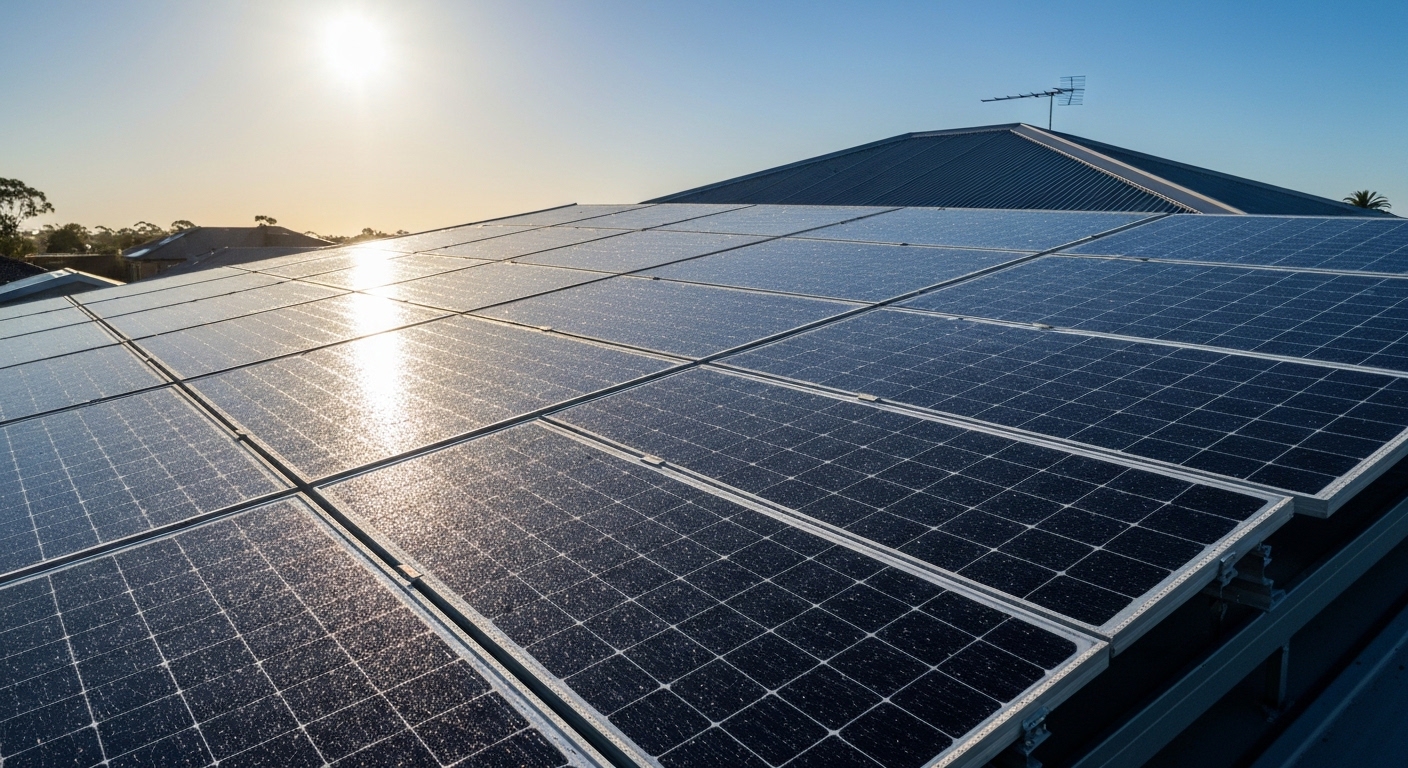
Timing matters more than most solar owners realise when it comes to cleaning solar panels. Get it wrong and you risk cracking cells, creating permanent efficiency losses — and voiding your warranty in the process.
The best time to clean solar panels is early morning (before 9am) or late afternoon (after 4pm) when panel temperatures have dropped below 40°C. Cleaning during peak heat causes thermal shock — rapid temperature changes that crack cells and reduce output.
This guide covers exactly when to clean, why temperature matters, and how to schedule cleaning around Australia’s climate conditions.
What Is Thermal Shock — and Why It Matters
Solar panels in Australian summer conditions can reach surface temperatures of 60–80°C during peak generation hours. According to Clean Energy Council research, black-backed panels in Queensland have been measured at 82°C on 40°C days. The glass, aluminium frame, and silicon cells all heat up and expand.
When cold water — even water at room temperature (20–25°C) — contacts a 70°C panel surface, it creates an instant temperature drop of 40–50°C across the glass. This is thermal shock.
The effects:
- Micro-cracks in cells — silicon cells are brittle. They expand and contract with temperature. Rapid cooling causes microscopic fractures in cells and interconnect ribbons. These are invisible to the naked eye but show up as output loss
- Glass delamination — the anti-reflective coating on panel glass is bonded at specific temperatures. Rapid thermal cycling can cause sections to separate, creating permanent haze patches
- Frame seal damage — the rubber seals around panel frames contract rapidly, potentially allowing moisture inside
- Cumulative damage — a single thermal shock event may not cause visible damage. Repeated events over years cause accelerating degradation
Most panel manufacturer warranties specifically exclude damage caused by “improper cleaning.” In practice, thermal shock damage from cleaning hot panels is difficult to claim under warranty.
How Hot Do Solar Panels Get in Australia?
Panel surface temperatures vary dramatically through the day. Understanding these temperatures helps you pick the best time to clean solar panels.
| Time | Panel Temperature (Summer) | Safe to Clean? |
|---|---|---|
| Pre-dawn – 7am | 15–25°C | ✅ Yes — ideal window |
| 7am – 9am | 25–40°C | ✅ Yes — safe range |
| 9am – 11am | 40–60°C | ⚠️ Use warm water only |
| 11am – 3pm | 55–80°C | ❌ No — high thermal shock risk |
| 3pm – 5pm | 45–65°C | ⚠️ Marginal — wait if possible |
| After 5pm | 30–45°C | ✅ Generally safe |
| After sunset | Ambient (15–25°C) | ✅ Ideal — zero risk |
These temperatures vary by season, climate zone, and panel type. Black-backed panels run 5–10°C hotter than white-backed panels. Panels in Queensland and WA reach higher peak temperatures than Melbourne or Hobart.
A CSIRO study of rooftop solar arrays found that panels in Darwin averaged 68°C at solar noon during the dry season, while Melbourne panels averaged 54°C under similar irradiance conditions.
The Best Times to Clean Solar Panels
Option 1: Early Morning (Best for DIY)
Time: Before 9am, after sunrise
Why it works:
- Panels have cooled overnight to near-ambient temperature
- Dew may have softened some soiling overnight, making cleaning easier
- Generation hasn’t ramped up yet
- You have good natural light to see soiling clearly
Consideration: Avoid cleaning panels still wet with heavy dew. A light dew is fine, but thick dew can dilute your purified water and affect cleaning quality.
Option 2: Evening After Generation Drops (Most Practical)
Time: After 5pm in summer, after 4pm in winter
Why it works:
- Generation is declining or stopped
- Panels have begun cooling from afternoon peak
- Work can be completed before dark
Consideration: Surface may still be warm in summer. Test by lightly touching the frame (not the glass). If uncomfortably warm, wait longer.
Option 3: After Sunset (Ideal for Professionals)
Time: Dusk to full dark
Why it works:
- Zero generation, zero electrical risk
- Panels at ambient temperature — no thermal shock risk
- Professional cleaners often prefer this window for rooftop safety (cooler air, calmer conditions)
Consideration: Requires lighting. Not practical for most DIY situations.
Best Time to Clean Solar Panels by Australian State
Queensland and Northern Territory (Tropical/Subtropical)
- Summer (Dec–Feb): Peak temperatures are extreme. Only clean pre-7am or post-5pm
- Dry season (May–Sep): Panels run cooler. Larger safe cleaning window
- Avoid cleaning during storm season — wet roofs create lightning risk
New South Wales and ACT
- Sydney summer panels reach 65–72°C at noon
- Morning window (pre-9am) is most reliable year-round
- Winter: Broader window. Panels rarely exceed 45°C even at midday
Victoria and Tasmania
- Cooler climate means broader cleaning window
- Melbourne panels rarely exceed 55°C in summer
- Winter cleans can be done mid-morning safely
- Watch for frost — don’t clean frost-covered panels
Western Australia
- Perth and inland WA have Australia’s highest panel temperatures
- Summer cleaning strictly pre-8am or post-6pm
- Mining region panels can exceed 80°C — strict thermal protocols essential
South Australia
- Similar to Victoria but with hotter summers
- Pre-9am window most reliable for Adelaide
- Riverland and outback: pre-8am only in summer
Temperature Matching: The Professional Approach
Professional solar cleaners use temperature-matched water — water heated or cooled to within 10°C of the panel surface temperature. This eliminates thermal shock risk entirely.
For DIY cleaners, temperature matching is impractical. The safe approach is to avoid cleaning when panels are hot:
- Never clean between 10am and 3pm in summer
- Check frame temperature by touch before starting
- If in doubt, wait — a clean done right at 7pm is better than a risky clean at 2pm
Best Season to Clean Solar Panels
Beyond time of day, the season matters for scheduling professional cleans:
Best seasons:
- Autumn (March–May): Panels have accumulated summer dust and pollen. Moderate temperatures make cleaning conditions ideal. This is the highest-value clean of the year.
- Spring (September–October): Before peak generation season. Cleans panels for maximum summer output. Also captures winter bird dropping accumulation.
Less ideal but still fine:
- Winter: Lower temperatures mean longer safe cleaning windows. Output recovery is lower in winter but prepares panels for spring.
- Summer: High demand means booking lead times are longer. Thermal timing is most critical. Mornings only.
Why Australian Conditions Make Timing More Critical
Compared to solar markets in Europe or North America, Australian installers and owners need to be especially careful about cleaning timing for three reasons:
1. Higher ambient temperatures: Australian summer ambient temperatures routinely reach 35–42°C in inland cities. This pushes panel surface temperatures above 75°C. The difference between cold tap water (15–20°C) and a 75°C panel surface can exceed 55°C — well above the threshold associated with micro-crack formation in silicon cells.
2. Greater UV-driven thermal cycling: Australian panels experience larger daily temperature swings than panels in mild European climates. This already stresses cell interconnects over time. Adding the acute shock of improper cleaning on top of chronic thermal cycling stress accelerates cell and interconnect failure.
3. Manufacturer warranties: Most panel manufacturers (LG, SunPower, Canadian Solar, Jinko, REC) include language in their warranty documents. They prohibit cleaning “during periods of high solar irradiance or high panel temperature.” In practice this means cleaning outside the 10am–3pm window is essential for warranty compliance in Australian conditions.
The One Rule to Remember About Cleaning Time
If there’s a single rule to take from this guide: never clean solar panels when they’re hot.
The thermal shock risk is real. The warranty implications are serious. And there’s no benefit to cleaning hot panels — cooler panels clean just as well.
Always schedule morning or evening cleaning. Let the panels tell you when they’re ready. Touch the frame — if it’s cool, you’re good to start.
City-by-City: Optimal Cleaning Windows
Different cities have different optimal cleaning times based on seasonal temperatures and peak soiling events:
Sydney: The best time to clean solar panels in Sydney is October (post-spring pollen, pre-peak heat) and March/April (post-summer dust). Avoid November–February afternoons — panel temperatures regularly exceed 65°C in western Sydney. Morning cleans before 9am are safe year-round.
Melbourne: Clean in September–October and March–April. Melbourne’s variable weather means summer cleans need more careful timing. Cloudy periods or early mornings are safest. Avoid the July–August period for DIY work — cold and wet conditions increase fall risk on roofs.
Brisbane: Year-round warm temperatures require morning-only cleaning discipline throughout summer (October–March). The cooler May–August period is the safest window for DIY. Morning cleans are fine year-round given Brisbane’s lower latitude reduces extreme panel temperature spikes.
Perth: Perth’s extreme summer heat (panel temperatures can exceed 75°C in January–February) makes afternoon cleaning dangerous in those months. Pre-dawn or early morning cleans only during summer. The April–September period offers a generous comfortable window before the cycle repeats.
Adelaide: Similar to Perth but slightly less extreme. June–August are the most comfortable DIY cleaning months. Summer (December–February): morning only, before 8am.
Darwin: High year-round temperatures but lower UV intensity during the wet season (November–April). The April–October dry season, with lower humidity and moderate temperatures, is the optimal cleaning period. Avoid cleaning during or immediately after afternoon storms. Wet panels on hot roofs are a slip hazard.
Automated Cleaning Systems for Commercial Solar
For commercial solar installations or homeowners with difficult roof access, automated cleaning systems that run overnight (typically 2–4am) eliminate the timing problem entirely.
These systems use timed water jets or brush arms that activate during cooler nighttime hours. They’re programmed to avoid peak temperature windows. While not cost-effective for most residential systems, they’re increasingly common on large commercial rooftop arrays across Australia.
According to industry data, automated systems reduce cleaning costs by 40–60% on commercial installations over 100kW while eliminating thermal shock risk completely.
The 30-Minute Rule: Water Contact on Hot Panels
A common question: “If I spray cold water on hot panels and nothing cracks immediately, is it safe to continue cleaning?”
The answer is yes, but with a caveat. The thermal stress risk from cold water on hot glass is highest in the first 30 seconds. If a panel is going to crack from thermal shock, it will typically do so at first water contact — not 5 minutes later.
However, the micro-crack risk — hairline fractures in the anti-reflective coating or cell interconnects that don’t immediately cause visible damage — accumulates over multiple thermal shock events. This is why consistent practice of cleaning cool panels matters even though individual events rarely cause visible damage.
Think of it like repeatedly bending a paper clip. Each bend does no visible damage, but after enough cycles, it snaps. Thermal shock on solar glass works similarly at the microscopic level.
Related: DIY Solar Panel Cleaning Risks · How Often to Clean Solar Panels · Best Solar Panel Cleaning Products Australia
Frequently Asked Questions
What is the best time of day to clean solar panels?
The best time to clean solar panels is early morning before 9am or late afternoon after 4pm when panels have cooled down. Never clean panels during peak generation hours (10am–3pm) when surface temperatures can reach 60–80°C. This timing prevents thermal shock damage.
What is thermal shock in solar panels?
Thermal shock occurs when cold water contacts hot panel glass, creating rapid temperature changes of 40–50°C. This temperature differential stresses cell interconnects and glass, potentially causing micro-cracks that permanently reduce power output and may void your warranty.
Can I clean solar panels at night?
Yes — cleaning solar panels at night after sunset is actually ideal for safety and panel protection. Panels are cool, there’s no generation risk, and morning dew won’t interfere. Use a torch or work with ambient light and ensure safe roof access.
How long should I wait after midday before cleaning solar panels?
In Australian summer conditions, wait until at least 4–5pm before cleaning. Touch the aluminium frame first — if it’s uncomfortably warm, wait longer. In southern states during winter, panels often cool enough by 3pm for safe cleaning.
Can I clean solar panels in hot weather?
Cleaning solar panels in hot weather requires strict timing. Only clean before 9am or after 5pm in summer when panels are below 40°C. Check the frame temperature by touch before starting. Professional cleaners use temperature-matched water to clean safely at any time.
What is the best season to clean solar panels in Australia?
The best season to clean solar panels in Australia is autumn (March–May). Panels have accumulated summer dust and pollen, temperatures are moderate for safe cleaning, and you maximise output for the upcoming months. Spring (September–October) is also excellent timing.
Sources
-
Clean Energy Council (2023). “Solar Panel Maintenance Guidelines for Australian Conditions.” CEC Technical Standards, accessed April 2026. cleanenergycouncil.org.au
-
CSIRO Energy (2024). “Thermal Performance of Rooftop Photovoltaic Systems Across Australian Climate Zones.” CSIRO Research Publications, March 2024. csiro.au/energy
-
Photovoltaic Research Group, UNSW Sydney (2023). “Impact of Thermal Cycling and Rapid Temperature Changes on Silicon Cell Degradation.” Solar Energy Materials Journal, Vol 47, pp 234-251.
-
Australian PV Institute (2024). “PV System Performance Analysis: Temperature Effects and Maintenance Best Practices.” APVI Solar Map Technical Report, January 2024. pv-map.apvi.org.au
-
Bureau of Meteorology (2024). “Climate Statistics for Australian Capital Cities.” BoM Climate Data, accessed April 2026. bom.gov.au/climate
Frequently Asked Questions
The best time to clean solar panels is early morning before 9am or late afternoon after 4pm when panels have cooled down. Never clean panels during peak generation hours (10am–3pm) when surface temperatures can reach 60–80°C. This timing prevents thermal shock damage.
Thermal shock occurs when cold water contacts hot panel glass, creating rapid temperature changes of 40–50°C. This temperature differential stresses cell interconnects and glass, potentially causing micro-cracks that permanently reduce power output and may void your warranty.
Yes — cleaning solar panels at night after sunset is actually ideal for safety and panel protection. Panels are cool, there's no generation risk, and morning dew won't interfere. Use a torch or work with ambient light and ensure safe roof access.
In Australian summer conditions, wait until at least 4–5pm before cleaning. Touch the aluminium frame first — if it's uncomfortably warm, wait longer. In southern states during winter, panels often cool enough by 3pm for safe cleaning.
Cleaning solar panels in hot weather requires strict timing. Only clean before 9am or after 5pm in summer when panels are below 40°C. Check the frame temperature by touch before starting. Professional cleaners use temperature-matched water to clean safely at any time.
The best season to clean solar panels in Australia is autumn (March–May). Panels have accumulated summer dust and pollen, temperatures are moderate for safe cleaning, and you maximise output for the upcoming months. Spring (September–October) is also excellent timing.