Solar Panel Cleaning Brisbane — What Every Queensland Homeowner Needs to Know
Brisbane's subtropical climate creates unique solar panel soiling challenges. Discover optimal cleaning frequency, local pricing, and why Brisbane panels need more attention than southern states.
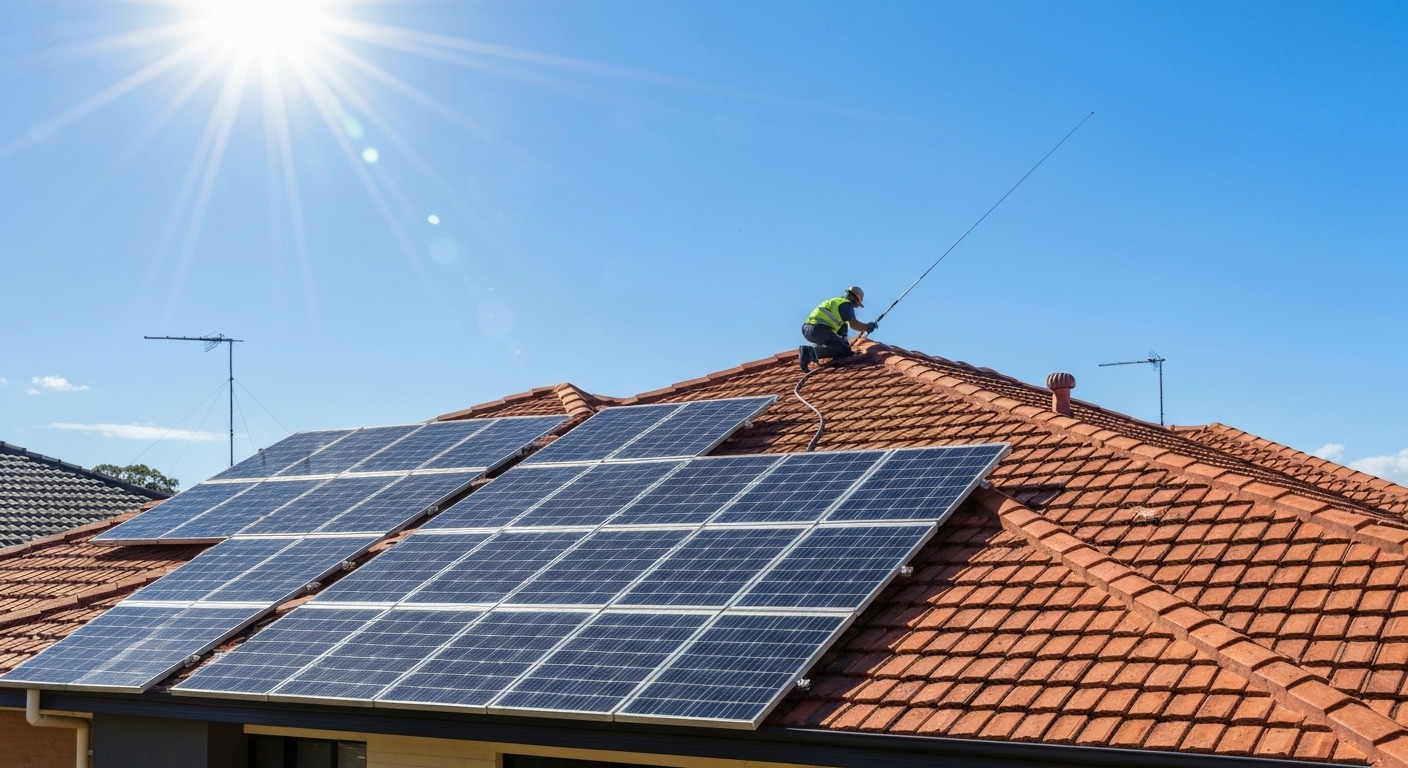
Brisbane has more solar panels per capita than almost any city on earth. Queensland’s subtropical sunshine makes it the most productive solar environment in Australia — but that same climate creates soiling and maintenance challenges that southern homeowners simply don’t face.
If you’re a Brisbane homeowner with rooftop solar, this guide covers everything you need to know about keeping your panels clean, what’s unique about Brisbane conditions, and how to find a reliable local cleaning service.
Why Brisbane Is Different for Solar Maintenance
Brisbane sits at approximately 27°S latitude, with a humid subtropical climate characterised by hot, humid summers (November–April) and warm, dry winters. This climatic profile creates very specific solar panel soiling conditions:
1. Subtropical Humidity and Biological Growth
The combination of Brisbane’s warmth and humidity — summer months regularly hitting 80–90% relative humidity — creates ideal conditions for biological growth on solar panel glass. Algae, moss, lichen, and biofilm establish faster on Brisbane panels than on the same panels installed in Melbourne or Perth.
Biological growth is insidious because it’s not always visible until it’s well-established. A slight green or grey tinge on panel surfaces from ground level often represents weeks of established growth that’s already reducing output. In Brisbane’s climate, panels can develop early-stage biological soiling within 3–6 months of a clean — far faster than in drier southern cities.
2. Year-Round Bird Activity
Brisbane’s subtropical environment supports year-round bird activity, including several species notorious for solar panel soiling:
- Rainbow lorikeets — highly active, high-acid droppings, travel in flocks
- Sulphur-crested cockatoos — known to peck at panel frames and DC wiring conduits
- Noisy miners — aggressive nesters; produce large dropping volumes relative to size
- Indian mynas — introduced pest species; nest under panels opportunistically
Unlike Melbourne or Hobart where bird activity reduces significantly in winter, Brisbane birds are active on and around solar arrays 365 days a year. This drives a higher base rate of dropping accumulation.
3. Wet Season Soiling Cycles
Brisbane’s wet season (November–April) brings significant rainfall, which superficially cleans panels. However:
- Post-storm rainfall often deposits wind-carried red dust from western Queensland onto panel surfaces
- High humidity encourages biological growth to continue growing even through the wet season
- Storm events can deposit organic debris (leaves, bark, seeds) that traps moisture against panels
4. UV Intensity
Brisbane experiences UV index values of 12–16+ during summer — among the highest in the world. This extreme UV accelerates degradation of panel AR coatings, particularly when they’re already stressed by biological growth or chemical contamination from incorrect cleaning products.
Recommended Cleaning Schedule for Brisbane
Based on the soiling factors above, Brisbane homeowners should follow this schedule:
| Situation | Recommended Frequency |
|---|---|
| Standard suburban Brisbane | Twice yearly (June + November) |
| Near high-bird-activity areas (parks, waterways) | Every 3–4 months |
| Coastal Brisbane (Moreton Bay, Redlands) | Every 4 months (salt + humidity) |
| South East Queensland bushfire zones | After any significant smoke event |
| Post-storm (heavy debris) | Within 2–4 weeks after major events |
| Panels with visible biological growth | Immediately + review frequency |
Brisbane Solar Panel Cleaning Costs (2026)
The Brisbane solar cleaning market is competitive, with numerous operators serving the metro area and surrounds.
| System Size | Average Brisbane Price | What’s Included |
|---|---|---|
| Small (10–16 panels, up to 5 kW) | $130–$190 | Basic clean, deionised water |
| Standard (16–24 panels, 6–8 kW) | $160–$260 | Clean + inspection |
| Large (24–32 panels, 9–13 kW) | $250–$380 | Clean + bird check + report |
| Commercial (32+ panels) | $350–$600+ | Full service + written report |
Additional costs to consider:
- Bird proofing installation: $350–$650 for standard residential
- Gutter cleaning add-on: $80–$150
- Nest removal: $60–$120 (plus disinfection)
- Same-day emergency clean (post-storm): 20–30% premium
What to Look for in a Brisbane Solar Cleaner
With dozens of operators in the market, quality varies significantly. Before booking, ask:
-
Do they use deionised water? Ask for TDS (total dissolved solids) reading — it should be under 15 ppm. Operators using tap water (Brisbane tap water TDS varies from 100–250 ppm) will leave mineral deposits.
-
Insurance — public liability minimum $5–10M, plus workers compensation for roof work.
-
Experience with Queensland conditions — ask specifically about biological growth treatment. Brisbane cleaners should understand that algae and lichen require different treatment than simple dust.
-
Can they provide before/after output data? Good operators check inverter generation before the clean and can give you a comparison 24–48 hours later.
-
Do they inspect for bird nesting? A comprehensive Brisbane clean should include a check under panels for nest establishment.
The Cost of Neglecting Brisbane Solar Panels
Brisbane’s combination of high solar irradiance and faster soiling rates makes the financial cost of neglect higher than in most Australian cities.
Sample calculation — 6.6 kW system in Sunnybank:
- Clean system expected annual generation: ~10,200 kWh (Brisbane’s high irradiance)
- After 18 months without cleaning (biological growth + bird droppings): estimated 22% soiling loss
- Lost generation: ~2,244 kWh annually
- Electricity value of lost generation (30% self-use at $0.28 + 70% export at $0.08): ~$314/year
A $220 clean recovers most of that $314 loss. The payback is less than one billing cycle.
Brisbane-Specific Maintenance Calendar
January–February: Wet season peak. Monitor for storm debris. Avoid cleaning in rain or immediately after storms (wait for panels to dry fully).
March–April: As wet season ends, book an autumn clean. Biological growth accumulated through summer humidity should be addressed before the drier months.
May–June: Optimal first clean of the year. Lower humidity, cooler temperatures, and longer days make this the best professional cleaning window.
July–August: Monitor output. Bird activity remains high. Check for new nesting activity under panels.
September–October: Spring pollen season begins. Eucalyptus and native flowering trees drop pollen loads. Book second clean of the year in October.
November–December: Pre-wet-season. Ensure panels are clean before the Christmas holiday period when many cleaning services book out. Early November is ideal.
Conclusion
Brisbane’s subtropical climate means solar panel soiling happens faster, biological growth establishes more readily, and bird activity never stops. Twice-yearly professional cleaning is the minimum for Brisbane homeowners — not an optional luxury.
The investment of $160–$260 per clean on a system generating $1,500–$2,000+ in annual electricity value makes straightforward financial sense. Choose an operator who uses deionised water, understands Queensland’s soiling conditions, and checks for biological growth alongside standard dust removal.
Questions to Ask a Brisbane Solar Cleaning Company
Before booking, ask these specific questions to separate quality operators from the rest:
-
Do you use deionised water for the final rinse? In Brisbane, tap water hardness varies across suburbs but is generally moderate. DI water eliminates mineral spotting entirely — a mark of a professional setup.
-
Do you check for biological growth as part of the clean? Brisbane’s humidity means algae and early-stage lichen is common. A cleaner who only removes dust is missing half the job.
-
Do you inspect for bird activity under the panels? With Indian mynas and pigeons active year-round in Brisbane, a good cleaner flags any signs of nesting while on the roof.
-
What’s your fall protection setup? Any legitimate operator working above single-storey should have documented WHS fall protection procedures. Don’t let anyone on your roof without it.
-
Do you provide a written quote and invoice? Useful for warranty records and comparison shopping.
Prices should fall within $160–$280 for a standard 6.6kW Brisbane system. If a quote is significantly lower, clarify whether DI water and a full inspection are included.
Bird Activity: Brisbane’s Year-Round Challenge
Unlike southern states where bird activity reduces in winter, Brisbane’s subtropical climate means year-round breeding and nesting activity. Pigeons and Indian mynas are particularly aggressive nesters under solar panels in inner Brisbane, Ipswich, and the Moreton Bay suburbs.
Signs to watch for in Brisbane specifically:
- Indian myna chattering from the roof at any time of year (they don’t have an “off season” in SE Queensland)
- Sticky organic debris on panels — Brisbane’s humidity accelerates nest decomposition, creating a smelly residue that’s harder to clean than dry material
- Localised output drops — per-panel monitoring on Enphase or SolarEdge systems will pinpoint nesting-affected panels
If you have bird activity in Brisbane, bundle bird mesh installation with your next professional clean. Combined service pricing from most Brisbane operators is typically $450–$750 for cleaning + full bird mesh on a 6.6kW system.
Related: Solar Panel Cleaning Cost Australia 2025 · How Often to Clean Solar Panels · Solar Bird Proofing Guide
Frequently Asked Questions
How often should I clean solar panels in Brisbane?
Brisbane solar panels should be cleaned at least twice a year — typically in June and again in November. The subtropical humidity encourages faster biological growth (lichen, moss, algae) than in drier southern cities, and high bird activity year-round means more frequent dropping accumulation.
How much does solar panel cleaning cost in Brisbane?
Professional solar panel cleaning in Brisbane costs $160–$260 for a standard 6.6 kW residential system. Prices vary by suburb, system size, roof accessibility, and whether bird proofing or gutter cleaning is included.
What’s unique about solar soiling in Brisbane?
Brisbane’s subtropical climate drives two problems: high pollen loads from native flora (August–October), and year-round bird activity from species like rainbow lorikeets, noisy miners, and sulphur-crested cockatoos. The combination of humidity, biological growth, and bird droppings makes Brisbane panels dirtier faster than Adelaide or Perth systems.
Do Brisbane solar panels need cleaning after storms?
Yes — post-storm cleaning is often necessary in Brisbane. Summer storm events deposit debris, leaves, and compacted dust on panels. While heavy rain removes some loose soiling, storm residue (including red dust carried by wind events from western QLD) often requires mechanical cleaning to fully remove.
Is there a best season to clean solar panels in Brisbane?
Autumn (April–May) and late spring (October–November) are optimal for Brisbane. Autumn cleaning removes the summer’s accumulated humidity-driven biological growth and storm residue. Spring cleaning prepares panels for peak summer output when Queensland’s solar irradiance is at its highest.
Frequently Asked Questions
Brisbane solar panels should be cleaned at least twice a year — typically in June and again in November. The subtropical humidity encourages faster biological growth (lichen, moss, algae) than in drier southern cities, and high bird activity year-round means more frequent dropping accumulation.
Professional solar panel cleaning in Brisbane costs $160–$260 for a standard 6.6 kW residential system. Prices vary by suburb, system size, roof accessibility, and whether bird proofing or gutter cleaning is included.
Brisbane's subtropical climate drives two problems: high pollen loads from native flora (August–October), and year-round bird activity from species like rainbow lorikeets, noisy miners, and sulphur-crested cockatoos. The combination of humidity, biological growth, and bird droppings makes Brisbane panels dirtier faster than Adelaide or Perth systems.
Yes — post-storm cleaning is often necessary in Brisbane. Summer storm events deposit debris, leaves, and compacted dust on panels. While heavy rain removes some loose soiling, storm residue (including red dust carried by wind events from western QLD) often requires mechanical cleaning to fully remove.
Autumn (April–May) and late spring (October–November) are optimal for Brisbane. Autumn cleaning removes the summer's accumulated humidity-driven biological growth and storm residue. Spring cleaning prepares panels for peak summer output when Queensland's solar irradiance is at its highest.