How to Choose a Solar Panel Cleaner in Australia: A No-Nonsense Hiring Guide
Not all solar panel cleaners are equal and a bad one can void your warranty, damage your panels, or injure themselves on your roof. Here is exactly what to check before hiring.
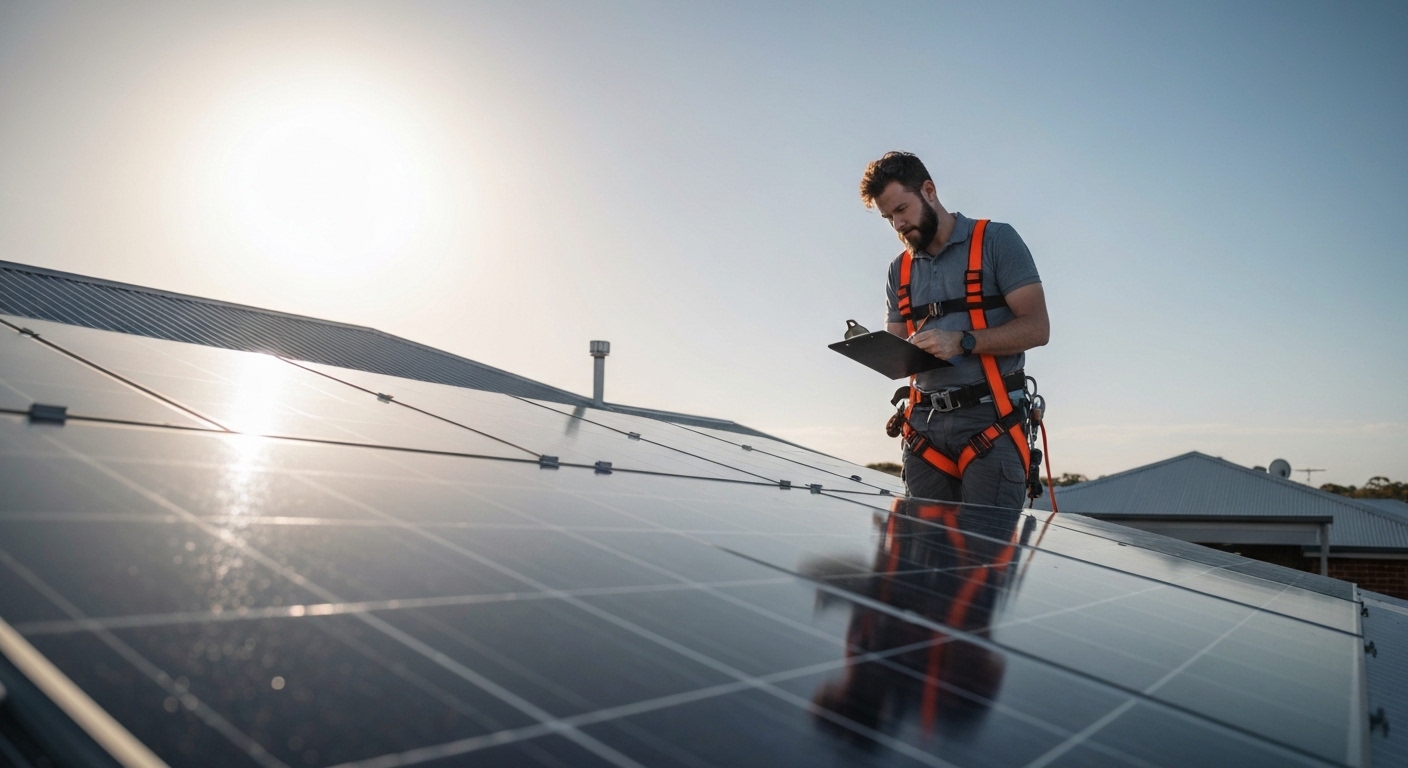
Hiring someone to clean your solar panels should be straightforward. In practice, the market has a significant tail of operators using incorrect methods — tap water with garden hoses, pressure washers, no insurance, and no relevant training. Getting it wrong does not just mean poorly cleaned panels; it can mean voided warranties, damaged cells, and a contractor who injures themselves on your roof with no recourse.
This guide gives you a complete framework for how to choose a solar panel cleaner in Australia — what to ask, what to verify, what red flags to watch for, and how to compare quotes sensibly. Whether you’re in Sydney, Melbourne, Brisbane, Perth, or regional Australia, these principles apply to selecting a qualified solar panel cleaning professional.
Why Choosing the Right Solar Panel Cleaner Matters More Than You Think
The solar cleaning industry in Australia is largely unregulated at the service level. Anyone with a bucket and a ladder can advertise as a solar panel cleaning specialist. The consequences of choosing the wrong solar panel cleaner include:
- Voided warranty: Most panel manufacturers specify soft brushes, pH-neutral cleaning agents, and no pressure washing. A cleaner who ignores these requirements voids your warranty permanently, even for future unrelated issues.
- Hot spot damage: Scratched anti-reflective coatings from abrasive tools reduce cell efficiency over time and can contribute to hot spot development.
- Mineral spotting: A cleaner using standard tap water (particularly in Perth, Adelaide, or inland areas with high-TDS water) leaves behind mineral deposits that are harder to remove than the original soiling.
- Property damage: An uninsured cleaner who breaks a tile, damages a gutter, or cracks a panel leaves you with no recourse beyond costly legal action.
- Safety liability: If a contractor without Working at Heights training is injured on your property, the legal situation is complex and potentially costly.
The price difference between a good cleaner and a poor one is rarely more than $50 to $100. The risk difference is enormous.
Understanding What Professional Solar Panel Cleaners Do
Before learning how to choose a solar panel cleaner, it helps to understand what separates professional service from amateur work.
A professional solar panel cleaning service in Australia includes:
Pre-cleaning assessment — Inspecting panel condition, mounting hardware, wiring, and inverter performance before work begins. This establishes a baseline and identifies existing issues.
Proper water treatment — Using deionised (DI) or demineralised water that leaves no mineral deposits. Standard tap water contains dissolved solids that create spotting, especially in hard-water areas like Perth, Adelaide, and Western Sydney.
Correct tools and technique — Soft-bristle brushes or microfibre applicators specifically designed for solar panels. No pressure washers, no abrasive pads, no squeegees with metal edges.
Safety compliance — Working at Heights certification, appropriate fall protection equipment, and documented risk assessments for roof work above single-storey height.
Post-cleaning verification — Checking inverter output after cleaning to confirm performance improvement, and providing a written service report documenting observations.
When choosing a solar panel cleaner, you’re not just paying for labour — you’re paying for method, equipment, insurance, and expertise that protects your investment.
Step 1: How to Find Qualified Solar Panel Cleaners in Your Area
Recommended sources:
- Word of mouth from neighbours with solar in the same suburb — they deal with the same soiling conditions and can give you real-world performance feedback
- Your original solar installer — many offer maintenance packages and can refer you to a trusted cleaner
- Clean Energy Council business finder — searchable by state and service type
- Google Maps with reviews — look for businesses with 15 or more reviews and a consistent score above 4.5; read the 1 to 3 star reviews carefully
- Hipages or Airtasker — convenient but exercise more due diligence, as these platforms do not verify insurance or qualifications
Avoid: Door-to-door solar cleaners offering discounts for cash-in-hand. This is the most common source of uninsured, under-qualified operators.
When searching online, use specific terms like “solar panel cleaner [your suburb]” or “professional solar cleaning [your city]” to find local operators. Local cleaners often have better knowledge of regional soiling conditions (coastal salt, inland dust, bushfire smoke impact) and more competitive pricing due to reduced travel time.
Step 2: Essential Questions to Ask Before Choosing a Solar Panel Cleaner
Before requesting a formal quote, ask these questions on the initial call or via email:
Insurance
- Can you provide a Certificate of Currency for your public liability insurance before starting work?
- What is your coverage amount? (Correct answer: $10 million minimum)
- Do you hold workers compensation for your team?
Qualifications
- Do you hold a Working at Heights certification? (Correct answer: Yes — and they should be able to name the specific unit of competency)
- Are you a licensed electrician, or do you partner with one for the inspection component?
Method
- What water do you use — deionised, purified, or tap? (Correct answer: deionised or purified — never tap water alone)
- Do you use a pressure washer? (Correct answer: No)
- What brush type do you use? (Correct answer: soft-bristle nylon or equivalent — not hard-bristle or abrasive pads)
- What cleaning solution, if any? (Correct answer: pH-neutral, panel-manufacturer-approved, or none — just DI water)
Reporting
- Do you provide a written service report?
- Do you check inverter output before and after the clean?
A company that handles these questions fluently and with specific answers is operating professionally. A company that is evasive, dismissive, or cannot answer the insurance questions is a risk. This vetting process is the most important step in choosing a solar panel cleaner you can trust.
Step 3: How to Compare Solar Panel Cleaning Quotes
Request at least two written quotes. A compliant quote should include:
| Element | What to Look For |
|---|---|
| Business name and ABN | Verify ABN on ABN Lookup (abr.business.gov.au) |
| Contact details | Physical address or suburb, phone, email |
| Scope of work | Number of panels, system size, specific inclusions |
| Cleaning method | Water type, brush type, process described |
| Price (inc. GST) | Total price — not a “starting from” figure |
| Scheduling | Timeframe and what happens if weather prevents completion |
| Warranty/guarantee | Any re-clean guarantee if output does not improve? |
Price comparison reference:
| If the quote is… | Assessment |
|---|---|
| Under $140 for 6.6 kW (major city) | High risk — check method carefully |
| $150 to $200 for 6.6 kW | Market standard low end — verify insurance |
| $200 to $280 for 6.6 kW | Market standard — typical range in most cities |
| $280 to $350 for 6.6 kW | Premium range — expect full reporting and inspection |
| Over $350 for 6.6 kW (no inspection component) | May be overpriced — compare carefully |
The cheapest quote is rarely the best value when the method, insurance, and reporting are not factored in. When comparing quotes from multiple solar panel cleaners, prioritise method and credentials over price alone.
Step 4: Verifying Credentials When Choosing a Solar Panel Cleaner
Check the ABN
Every legitimate Australian business has an ABN. Before paying any deposit:
- Go to abr.business.gov.au
- Search the ABN from the quote
- Confirm the registered business name matches the name on the quote
- Confirm the business is registered for GST (if they charged GST on the quote)
- Confirm the ABN is active (not cancelled)
An ABN mismatch or a sole trader operating under a different business name than the ABN registration is a yellow flag. A cancelled ABN is a definitive red flag.
Verify the Insurance Certificate
When the cleaner provides their Certificate of Currency:
- Check the insured party name matches the ABN registration
- Check the expiry date — it must be current
- Check the coverage amount — must be $10 million minimum public liability
- Check the activity covered — should include cleaning services or property maintenance or similar; some policies have activity exclusions
- Note the insurer name — for a claim, you deal with the insurer directly
If the Certificate of Currency is not provided before work commences, reschedule until it is. This non-negotiable step protects you when choosing a solar panel cleaner.
Red Flags to Avoid When Choosing a Solar Panel Cleaner
Walk away from a solar panel cleaner who:
- Cannot produce a Certificate of Currency when asked
- Uses or proposes to use a pressure washer at any setting
- Uses standard tap water as the primary or only rinse
- Quotes verbally only with no written follow-up
- Has no ABN or an ABN that does not match their business name
- Offers a door-to-door same-day discount for cash
- Cannot name their Working at Heights qualification or provides vague answers
- Has no online reviews at all, or significant negative reviews about damaged panels
- Is unwilling to provide a service report or output comparison
Specific Warning Signs When Comparing Solar Cleaning Quotes
“Cash only, no receipt” — A legitimate business provides a proper invoice. Cash-only operators often aren’t insured and have no verifiable business identity. If something goes wrong (damaged panel, fall on your property), you have no recourse.
No mention of water type — If a quote doesn’t specify whether deionised water is used, ask. Operators using standard tap water in hard-water cities like Perth and Adelaide will leave mineral deposits. A professional operator should mention DI water proactively — it’s a mark of quality.
Very low price without explanation — A quote that’s 40–50% below market rates usually means something is cut: no insurance, minimal time on the roof, tap water, no inspection. The 6.6kW Sydney average is $200–$280. A quote at $120 warrants questions.
No on-site safety equipment — Any operator working above single-storey height should arrive with documented fall protection equipment. If they show up with just a hose and a bucket for a two-storey roof job, they’re not complying with WHS obligations.
Negative reviews mentioning damage — Search “[Company Name] + review” before booking. One or two negative reviews in a long history is normal. Multiple reviews mentioning scratched panels, no-show appointments, or no invoice are significant red flags.
What to Expect on Cleaning Day
When your chosen solar panel cleaner arrives, show them your inverter and ask them to note the current daily output reading before beginning. Mention any specific concerns such as cracked tiles near the panels, a panel you have noticed underperforming in your app, or bird activity at specific areas of the array.
Be available at completion for a walkthrough — a quality cleaner will want to show you the results and discuss anything they noticed. Check the inverter output later the same day on a clear day afternoon. This output comparison confirms the value of choosing a professional solar panel cleaner.
Choosing Between Solar Installers and Dedicated Cleaning Companies
Many homeowners wonder whether to use their original installer or a dedicated solar panel cleaning company. Both options have merit when choosing a solar panel cleaner:
Original solar installer advantages:
- Familiar with your specific system and installation
- May offer bundled maintenance packages
- Can address electrical issues during the same visit
- Warranty work may be combined with cleaning
Dedicated solar cleaning company advantages:
- More competitive pricing due to specialisation
- More efficient processes and specialised equipment
- Flexible scheduling focused solely on cleaning
- Often use purpose-built deionised water systems
For any system older than 5 years, having your installer perform the first professional clean makes sense due to the inspection component. Subsequent annual cleans can be from a dedicated cleaning specialist. When choosing a solar panel cleaner for routine maintenance, a dedicated cleaning company often provides better value.
How to Get the Most From Your Professional Clean
To maximise the value of a professional service:
-
Book at the right time: Pre-summer (October) or post-summer (March/April) cleans return the most value in most Australian climates. Avoid peak-summer bookings when demand is high and scheduling is tight.
-
Be home, or accessible: Good cleaners will want to show you any issues they find — bird activity, loose mounts, wiring concerns. Having someone available to walk around with the cleaner multiplies the information value of the service.
-
Check your inverter output the next clear day: Record today’s output (the day after your clean) in good weather. This gives you a clean baseline for comparing future output and identifying when the next clean is due.
-
Ask about a service reminder: Many solar cleaning companies offer annual reminder services. Opt in — it removes the mental burden of tracking the schedule yourself.
-
Ask for the inspection notes in writing: Even a brief email summary of what was observed is valuable. It creates a maintenance record and helps you spot trends year-over-year.
What a Great Solar Panel Cleaner Delivers
A professional solar panel cleaning service should leave you with panels visibly clean with no streaking or water spots (deionised water does not leave spots), a written service report noting any damage, soiling levels, pest activity, or maintenance concerns observed, before-and-after output data, an emailed invoice with full business details for your records, and confidence that your warranty is intact.
The best solar cleaners in Australia treat the service as a professional inspection — the cleaning is the means, and protecting your system’s performance and longevity is the goal. This comprehensive approach is what you should expect when choosing a solar panel cleaner.
Regional Considerations When Choosing a Solar Panel Cleaner in Australia
Soiling conditions vary significantly across Australia, which affects both how often you need cleaning and what expertise your chosen solar panel cleaner should have:
Coastal areas (Sydney, Gold Coast, Perth coastal suburbs): Salt accumulation requires more frequent cleaning (every 6 months). Choose a solar panel cleaner experienced with salt removal and corrosion inspection.
Inland cities (Canberra, Western Sydney, Adelaide): Dust and hard water are primary concerns. Deionised water is non-negotiable when choosing a solar panel cleaner in these regions.
Bushfire-prone areas (Blue Mountains, Adelaide Hills, Perth Hills): Post-fire smoke residue requires specialised cleaning. Choose a solar panel cleaner who understands ash removal techniques.
Tropical areas (Darwin, Far North Queensland): High humidity, bird activity, and organic growth require cleaners experienced with biological soiling and frequent maintenance schedules.
Rural areas: Farm dust, pollen, and reduced access to deionised water systems require choosing a solar panel cleaner with mobile water treatment equipment.
Sources
-
Clean Energy Council. (2025). Solar Panel Maintenance and Cleaning Guidelines. Retrieved from cleanenergycouncil.org.au
-
Safe Work Australia. (2024). Working at Heights Code of Practice. Retrieved from safeworkaustralia.gov.au
-
Standards Australia. (2023). AS/NZS 5033:2021 Installation and safety requirements for photovoltaic (PV) arrays. Retrieved from standards.org.au
-
Australian Competition and Consumer Commission. (2025). Solar Panel Warranty Rights and Obligations. Retrieved from accc.gov.au
Last updated: April 2026. Market price ranges reflect 2026 Australian conditions. Always verify qualifications and insurance directly with the contractor.
Related: Solar Panel Cleaning Cost Australia 2025 · What Voids Solar Panel Warranty · DIY Solar Panel Cleaning Risks
Frequently Asked Questions
What qualifications should a solar panel cleaner have in Australia?
At minimum: a Working at Heights qualification (RIIWHS204E or equivalent under the relevant state WHS framework), current public liability insurance ($10 million minimum), and an ABN. For systems requiring electrical inspection or inverter connection, a licensed electrician or CEC-accredited installer is required. Some providers also hold a Solar Cleaning Accreditation from industry bodies — look for this as a quality differentiator.
How do I verify a solar panel cleaner’s insurance?
Request a Certificate of Currency directly from the cleaner before work begins. A Certificate of Currency is a document from the insurance company (not the cleaner) that confirms the policy is active, the policy number, the coverage amount, and the expiry date. Verify the insured name matches the business name/ABN on their quote. Do not accept verbal assurances or a screenshot of an app as proof of insurance.
Should I use a local solar installer or a dedicated solar cleaning company?
Both can be appropriate. Dedicated solar cleaning companies often have more efficient processes, specialised equipment (deionised water systems, soft-bristle extension systems), and more competitive pricing. However, your original installer knows your system and may include cleaning as part of a maintenance package. For any system older than 5 years, having your installer perform the first professional clean (for the inspection component) makes sense; subsequent cleans can be from a dedicated cleaning specialist.
Are cheap solar panel cleaning quotes safe to accept?
Quotes significantly below market rate (under $140 for a 6.6 kW system in most major cities) should be treated with caution. Sub-market pricing often indicates the use of tap water instead of purified water (risks mineral spotting), no public liability insurance, lack of Working at Heights training, or use of improper equipment including pressure washers. The quality of a solar clean you cannot see — the water purity, the brush type, the working method — matters as much as the visible end result.
What should a solar panel cleaning quote include?
A professional written quote should include: the business name, ABN, and contact details; the number of panels and system size being cleaned; the cleaning method and water source (deionised/purified); what is included (inspection, report, before/after output check); the price including GST; and proof of insurance. Any quote that is only a verbal price should be followed up in writing before work commences.
What are the biggest red flags when choosing a solar panel cleaner?
Look for these warning signs when choosing a solar panel cleaner: cash-only payments with no receipt, quotes that don’t specify water type (deionised vs tap water), prices 40-50% below market rates without explanation, no mention of Working at Heights certification, operators arriving without proper safety equipment for two-storey work, multiple negative reviews mentioning panel damage or no-shows, and refusal to provide a Certificate of Currency before starting work.
When is the best time to book a solar panel cleaner in Australia?
The best time to book a professional solar panel cleaner in Australia is pre-summer (October) or post-summer (March/April). These periods return the most value in Australian climates as you’re either preparing panels for peak production season or removing accumulated dust and debris after summer. Avoid peak-summer bookings when demand is high, scheduling is tight, and prices may be elevated. Most Australian households benefit from annual or bi-annual cleaning depending on local soiling conditions.
Frequently Asked Questions
At minimum: a Working at Heights qualification (RIIWHS204E or equivalent under the relevant state WHS framework), current public liability insurance ($10 million minimum), and an ABN. For systems requiring electrical inspection or inverter connection, a licensed electrician or CEC-accredited installer is required. Some providers also hold a Solar Cleaning Accreditation from industry bodies — look for this as a quality differentiator.
Request a Certificate of Currency directly from the cleaner before work begins. A Certificate of Currency is a document from the insurance company (not the cleaner) that confirms the policy is active, the policy number, the coverage amount, and the expiry date. Verify the insured name matches the business name/ABN on their quote. Do not accept verbal assurances or a screenshot of an app as proof of insurance.
Both can be appropriate. Dedicated solar cleaning companies often have more efficient processes, specialised equipment (deionised water systems, soft-bristle extension systems), and more competitive pricing. However, your original installer knows your system and may include cleaning as part of a maintenance package. For any system older than 5 years, having your installer perform the first professional clean (for the inspection component) makes sense; subsequent cleans can be from a dedicated cleaning specialist.
Quotes significantly below market rate (under $140 for a 6.6 kW system in most major cities) should be treated with caution. Sub-market pricing often indicates the use of tap water instead of purified water (risks mineral spotting), no public liability insurance, lack of Working at Heights training, or use of improper equipment including pressure washers. The quality of a solar clean you cannot see — the water purity, the brush type, the working method — matters as much as the visible end result.
A professional written quote should include: the business name, ABN, and contact details; the number of panels and system size being cleaned; the cleaning method and water source (deionised/purified); what is included (inspection, report, before/after output check); the price including GST; and proof of insurance. Any quote that is only a verbal price should be followed up in writing before work commences.
Look for these warning signs when choosing a solar panel cleaner: cash-only payments with no receipt, quotes that don't specify water type (deionised vs tap water), prices 40-50% below market rates without explanation, no mention of Working at Heights certification, operators arriving without proper safety equipment for two-storey work, multiple negative reviews mentioning panel damage or no-shows, and refusal to provide a Certificate of Currency before starting work.
The best time to book a professional solar panel cleaner in Australia is pre-summer (October) or post-summer (March/April). These periods return the most value in Australian climates as you're either preparing panels for peak production season or removing accumulated dust and debris after summer. Avoid peak-summer bookings when demand is high, scheduling is tight, and prices may be elevated. Most Australian households benefit from annual or bi-annual cleaning depending on local soiling conditions.