Solar Panel Cleaning Insurance in Australia: What's Covered and What Isn't
Solar panel cleaning overlaps with home and contents, public liability, and product warranties. Here's how to make sure you're actually covered — and what gaps most homeowners don't know about.
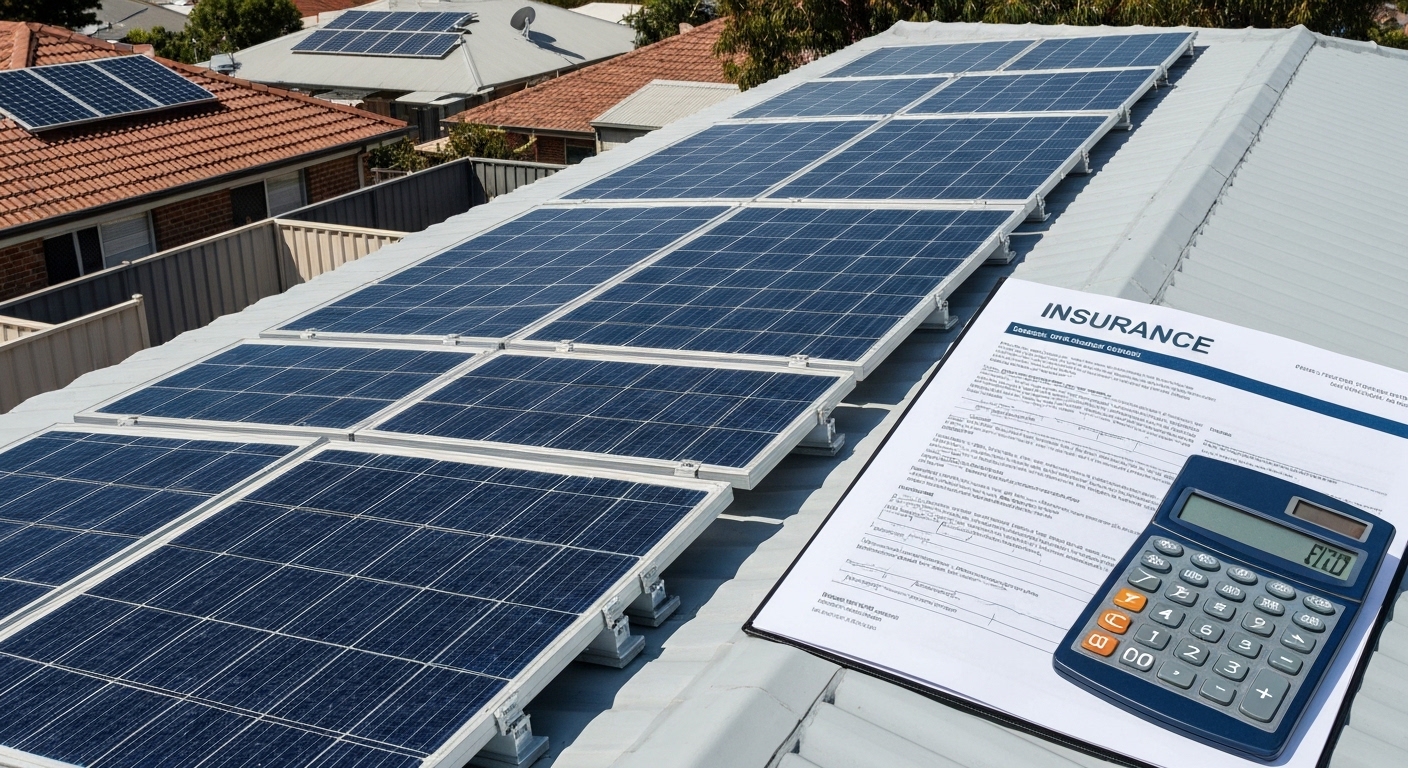
When a solar panel cleaner steps onto your roof, several insurance policies interact. You need to understand your home insurance, the cleaner’s public liability cover, your panel warranty, and your inverter warranty. Most Australian homeowners don’t know how these work together. They don’t know what happens when something goes wrong.
This guide explains what solar panel cleaning insurance covers. We’ll show you what questions to ask your insurer. You’ll learn how to protect yourself before any cleaning work begins.
Key Takeaways
- Solar panels need regular cleaning to keep your warranty valid.
- Some home insurers ask for proof of maintenance after a claim.
- Always check that your cleaner has public liability insurance.
- Ask for a certificate of currency before letting anyone on your roof.
- Keep your cleaning receipts. They can help with insurance claims.
- A dirty system that causes a fire may not be covered by insurance.
Understanding Solar Panel Cleaning Insurance Coverage
Solar panel cleaning insurance in Australia involves multiple policies. Your home insurance may cover damage to the panels themselves. The cleaner’s insurance covers damage they cause. Your manufacturer warranty protects against defects. But these policies don’t overlap as much as you’d think.
The gaps between these policies catch homeowners out. You might assume your home insurance covers everything. It doesn’t. You might think the cleaner’s insurance always applies. It won’t if they’re uninsured or underinsured.
Most solar panel cleaning insurance claims happen because:
- A cleaner cracks a panel
- Harsh chemicals void your warranty
- Equipment falls and damages your roof
- Someone gets injured during the work
Let’s break down each insurance type and what it actually covers.
The Four Types of Solar Panel Cleaning Insurance
1. Your Home and Contents Insurance
Your household policy covers two main scenarios:
First, if the cleaner damages your system and their insurer refuses the claim. Your accidental damage cover becomes your backup. Second, if cleaning causes other property damage. This includes dropped tools breaking skylights or damaged gutters.
Check these points in your policy:
- Are solar panels listed as part of your building? Most modern policies include them as fixtures.
- Do you have accidental damage cover? This costs an extra $50–$150 per year in many policies.
- Does your building sum insured reflect the cost to replace your solar system?
- Is there an exclusion for damage during maintenance work? Some policies exclude this.
The common gap: Many homeowners have basic “fire, theft, and natural disaster” cover only. This doesn’t include accidental damage. If a cleaner cracks a panel through negligence, you have no coverage. The claim falls entirely to the cleaner’s public liability policy.
2. The Cleaner’s Public Liability Insurance
Public liability (PL) insurance protects you when you hire any contractor. It covers physical damage to your property. It covers personal injury caused by the contractor’s negligence.
Minimum coverage needed: $10 million. This is standard for contractors working at heights on homes in Australia. Some strata managers require $20 million.
PL insurance covers:
- Broken solar panels during cleaning
- Damage to roof tiles, gutters, or cladding from cleaning equipment
- Injury to anyone caused by the contractor’s work
- Damage from chemical spills or cleaning product runoff
PL insurance does NOT cover:
- Deliberate damage or fraud by the contractor
- Damage by subcontractors not listed on the policy
- Your lost income from a damaged system
Always request a Certificate of Currency. This document proves the policy is current. It shows the insured name, coverage amount, and expiry date. Don’t accept verbal promises about insurance.
3. Panel Manufacturer’s Product Warranty
Solar panel warranties cover manufacturing defects. They don’t cover damage from improper cleaning. Your warranty becomes void if cleaners use:
- Pressure washers above 30–40 psi (the manufacturer’s limit)
- Abrasive materials like steel wool or hard brushes
- Harsh chemicals like solvents or strong acid cleaners
- Methods that cause physical damage
Insurance impact: If a cleaner voids your warranty, you lose protection against future panel problems. Your claim must come through the cleaner’s PL policy or Australian Consumer Law.
Check your warranty before cleaning. Know your panel brand, model, and warranty terms. Here are cleaning guidelines for major Australian panel brands:
- LG (Legacy warranty): Soft brush plus mild pH-neutral detergent or water only
- SunPower (Maxeon): Clean water and soft cloth; no pressure washer
- Trina Solar: pH 6–8 cleaning solution; soft brush; maximum 35 psi pressure
- Canadian Solar: Mild soapy water; no pressure washer; no abrasive tools
- REC Group: Soft cloth or sponge; mild detergent; no pressure washer
4. Inverter Warranty Coverage
Inverter warranties are separate from panel warranties. Cleaning rarely affects them directly. But if a cracked panel causes a ground fault, this can damage your inverter. The inverter manufacturer will ask for proof of the cause. The original fault (the cracked panel) sits with the cleaner’s PL insurance.
Common Solar Panel Cleaning Insurance Scenarios
Scenario 1: Cleaner Cracks a Panel
Who pays: The cleaner’s public liability insurance pays for panel replacement. This typically costs $300–$600 installed. If they have no insurance, your accidental damage cover (if you have it) is your backup. You can then pursue the cleaner under Australian Consumer Law.
Scenario 2: Cleaner Uses Pressure Washer and Voids Warranty
Who pays: This isn’t physical damage. It’s a warranty loss claim. The cleaner is liable under ACL for the reduced value of your system. You had a 10-year warranty. Now you have none. This requires documentation and possibly legal action. Some PL policies cover “consequential damage” like this.
Scenario 3: Hail Damages Panels During Cleaning
Who pays: This is a natural disaster claim through your home and contents building cover. The cleaner has no liability for weather events. Make sure your building sum insured covers the full replacement cost of your solar array.
Scenario 4: Cleaner Falls and Gets Injured
Who pays: The cleaner’s workers compensation insurance (if employed) or personal accident insurance (if self-employed) covers this. Your home insurance includes public liability for incidents on your property. But a professional contractor’s work injury is almost always their own insurance responsibility.
Important: If the cleaner works illegally (no Working at Heights certification, no ladder safety compliance), your insurer might contest a claim. Always use compliant contractors.
Scenario 5: You Fall During DIY Cleaning
Who pays: Your personal accident insurance (if you have it — many Australians don’t). Medicare covers medical costs. Workers compensation doesn’t apply unless you’re injured during employment work.
There is no insurance for homeowners who fall off their own roof during DIY cleaning. This is why professional cleaning is strongly recommended for any elevated access.
What Your Home Insurance Actually Covers
Most homeowners assume their solar panels are fully covered. They’re not always right. Coverage depends on how your policy defines “building” and whether you have accidental damage cover.
Standard building cover includes:
- Fire damage to panels
- Storm and hail damage
- Lightning strikes
- Malicious damage
Standard building cover excludes:
- Gradual deterioration (like dust buildup reducing efficiency)
- Maintenance issues
- Damage during cleaning without accidental damage cover
- Damage from your own DIY work
Accidental damage cover adds:
- Damage during cleaning by professionals
- Dropped tool damage
- Chemical spill damage
Check your Product Disclosure Statement (PDS). Look for the “building” definition. Confirm solar panels are listed. If they’re not mentioned, call your insurer directly and ask.
What the Cleaner’s Insurance Must Cover
Before you book any solar panel cleaning service, verify their insurance coverage. This protects you if something goes wrong.
Ask for proof of:
-
Public liability insurance: Minimum $10 million coverage. This must be current (not expired).
-
Workers compensation insurance: Mandatory if they employ staff. Protects their workers if injured on your property.
-
Working at Heights certification: Proves they’re qualified to work on your roof safely.
Request these documents:
- Certificate of Currency (not older than 30 days)
- Working at Heights qualification
- Written service agreement detailing the cleaning method
Red flags that mean walk away:
- “I’m insured” without providing proof
- An expired certificate
- No written agreement
- Quotes significantly below market rate (often means cutting corners, including insurance)
Before You Book: Solar Panel Cleaning Insurance Checklist
Questions to ask your cleaner before booking:
- Can you provide a current Certificate of Currency for public liability insurance?
- What is your coverage amount? (Minimum $10 million required)
- Do you hold current workers compensation insurance?
- Do you have a Working at Heights qualification?
- What cleaning method do you use? Is it compliant with panel manufacturer guidelines?
- Can you provide a written service agreement?
Check your own home insurance policy:
- Review your PDS for solar panel coverage definition
- Confirm your building sum insured includes solar system replacement cost
- Check if you have accidental damage cover (add it if you don’t)
- Note any exclusions for maintenance or cleaning activities
Document before cleaning begins:
- Photograph your panels before the clean
- Record current inverter output (today’s kWh vs yesterday)
- Keep your panel warranty documents accessible
- Save the cleaner’s Certificate of Currency
- Get a written quote and service agreement
How to Make a Solar Panel Cleaning Insurance Claim
If damage occurs during cleaning, follow these steps:
Step 1: Document everything immediately
- Take photos of the damage from multiple angles
- Note the date, time, and weather conditions
- Record which cleaner did the work
- Get a written statement from the cleaner (if possible)
Step 2: Notify the cleaner
- Contact them within 24 hours
- Send photos and a written description
- Request they lodge a claim with their insurer
- Keep all correspondence
Step 3: Contact their insurer
- Use the details on their Certificate of Currency
- Provide your documentation
- Get a claim reference number
- Follow up weekly if needed
Step 4: Contact your insurer (if needed)
- Only proceed if the cleaner’s insurer denies the claim or the cleaner was uninsured
- Provide all documentation
- Include the cleaner’s details
- Be prepared for excess payment
Step 5: Consider Australian Consumer Law
- If both insurance routes fail, ACL is your backup
- Document the substandard work
- Get written assessments from qualified installers
- Contact your state’s Fair Trading office
Australian Consumer Law: Your Safety Net
Regardless of solar panel cleaning insurance outcomes, you have rights under Australian Consumer Law (Schedule 2 of the Competition and Consumer Act 2010).
Consumer guarantees require:
- Work carried out with due care and skill
- Services fit for the stated purpose
- Completion in a reasonable time
If a cleaner damages your system, they must fix it. This means repair, replacement, or compensation.
If they refuse:
- Escalate to your state’s consumer tribunal
- NSW Fair Trading, Consumer Affairs Victoria, Office of Fair Trading QLD, etc.
- No lawyer needed
- Monetary claims up to $25,000 (varies by state)
- Minimal cost to you
This applies even if the cleaner has no insurance. They’re still legally responsible for substandard work.
What Most Insurance Policies Exclude
Understanding what’s not covered helps you avoid nasty surprises.
Common exclusions in home insurance:
- Wear and tear on panels
- Loss of efficiency from dirt or dust
- Damage from DIY cleaning
- Damage during maintenance by unqualified people
- Deliberate damage
- Damage that occurs gradually over time
Common exclusions in cleaner’s PL insurance:
- Damage to the cleaner’s own equipment
- Professional indemnity issues (design or advice problems)
- Damage from illegal work methods
- Damage by unlisted subcontractors
Panel warranty exclusions:
- Damage from pressure washing
- Damage from abrasive materials
- Damage from harsh chemicals
- Damage from installation errors
- Damage from extreme weather (covered by home insurance instead)
How Much Does Solar Panel Cleaning Insurance Cost?
For homeowners: Adding accidental damage cover to your home insurance typically costs $50–$150 per year. This depends on your insurer and your total building sum insured. Given that a single cracked panel costs $300–$600 to replace, this cover offers good value.
For cleaners: Professional solar panel cleaners pay $800–$2,000 per year for $10 million public liability insurance. This cost is built into their service rates. Cleaners charging unusually low rates often lack proper insurance.
The real cost: Hiring an uninsured cleaner might save you $50 on the cleaning. But if they crack a panel, you’ll pay $300–$600 out of pocket. If they fall and get injured, you could face legal liability. The “saving” isn’t worth the risk.
Tips to Protect Yourself
1. Only use insured cleaners This is non-negotiable. No Certificate of Currency means no work on your roof.
2. Add accidental damage cover If your home insurance doesn’t include it, add it now. The cost is minimal compared to the protection.
3. Keep detailed records Save every cleaning receipt, photo, and document. These help with claims and prove you maintained your system.
4. Check credentials Verify Working at Heights qualifications. Check ABN registration. Look for online reviews.
5. Get written agreements Never accept verbal-only arrangements. Get the cleaning method, products, and insurance details in writing.
6. Understand your warranty Know what your panel manufacturer allows. Share this with your cleaner before work starts.
7. Inspect after cleaning Check panels immediately after the job. Report any issues within 24 hours.
Summary
Solar panel cleaning insurance in Australia involves multiple policies. The gaps between them catch many homeowners out.
Remember these essentials:
-
Only hire cleaners with current $10 million+ public liability insurance. Request the Certificate of Currency before they step on your roof.
-
Check your home and contents policy for solar panel coverage. Consider adding accidental damage cover if you don’t have it.
-
Document your warranty terms and system condition before any cleaning work. This evidence protects you if disputes arise.
The $200–$300 professional clean is only cheap if the cleaner is properly insured. An uninsured cleaner who damages a panel and disappears creates a $300–$600 problem with no easy fix.
Your solar panels are a major investment. Protect them with the right insurance coverage and qualified cleaning professionals.
Sources
- Australian Government — Australian Consumer Law: https://www.accc.gov.au/business/business-rights-protections/australian-consumer-law
- Insurance Council of Australia — Home Insurance Guide: https://insurancecouncil.com.au/issues-in-focus/understanding-insurance/home-insurance/
- Clean Energy Council — Solar Panel Maintenance Best Practices: https://www.cleanenergycouncil.org.au/consumers/buying-solar
Last updated: April 2026. Insurance references are general information only and not financial advice. Always read the Product Disclosure Statement of any insurance product before purchasing and seek advice from a licensed financial adviser if required.
Related reading: Solar Panel Warranty Cleaning Requirements, What Voids Solar Panel Warranty, and DIY Solar Panel Cleaning Risks.
Frequently Asked Questions
Does home and contents insurance cover solar panel cleaning damage?
Most comprehensive home and contents policies in Australia cover accidental damage to solar panels during cleaning — for example, if a cleaner accidentally cracks a panel. However, this usually falls under ‘accidental damage’ cover, which is not included in all policies. Check your Product Disclosure Statement specifically for solar panels and accidental damage clauses. Some policies list solar panels as ‘fixtures and fittings’ included under the building sum insured; others require a separate schedule or endorsement.
What insurance should a solar panel cleaner carry?
A professional solar panel cleaner should carry: (1) Public liability insurance — minimum $10 million, covers damage to your property or injury caused by their work; (2) Workers compensation insurance — mandatory if they employ staff, covers their workers if injured on your property; (3) Tool and equipment insurance — covers their equipment. Always ask for a Certificate of Currency before work begins. A cleaner without public liability insurance should not be engaged.
If a solar panel cleaner voids my warranty, do I have any recourse?
Yes — through Australian Consumer Law (ACL). If a cleaner’s improper methods (such as using a pressure washer or harsh chemicals) void your panel warranty and damage the panels, you can pursue them under ACL for damages equivalent to the warranty loss. This requires you to document the damage, obtain a written assessment from your installer confirming warranty void, and demonstrate the cleaner’s method was the cause. Public liability insurance is the cleaner’s protection against this.
Does travel insurance cover damage to solar panels while a cleaner is working?
Travel insurance is irrelevant in this context. The relevant policy is your home and contents insurance (for damage to your property) and the cleaner’s public liability insurance (for damage they cause). If a cleaner damages your system and refuses to pay, you would pursue a claim through the cleaner’s public liability insurer, or through the courts using Australian Consumer Law.
Are solar panels covered as ‘fixtures’ or ‘contents’ under home insurance?
This varies by insurer and policy. Most policies treat solar panels as fixtures attached to the building and cover them under the building/structure component of the policy — not contents. This matters because building cover typically applies to fire, storm, and hail, but not always to accidental damage without an explicit endorsement. Always read the definition of ‘building’ in your PDS and confirm solar panels are listed or confirm directly with your insurer.
Frequently Asked Questions
Most comprehensive home and contents policies in Australia cover accidental damage to solar panels during cleaning — for example, if a cleaner accidentally cracks a panel. However, this usually falls under 'accidental damage' cover, which is not included in all policies. Check your Product Disclosure Statement specifically for solar panels and accidental damage clauses. Some policies list solar panels as 'fixtures and fittings' included under the building sum insured; others require a separate schedule or endorsement.
A professional solar panel cleaner should carry: (1) Public liability insurance — minimum $10 million, covers damage to your property or injury caused by their work; (2) Workers compensation insurance — mandatory if they employ staff, covers their workers if injured on your property; (3) Tool and equipment insurance — covers their equipment. Always ask for a Certificate of Currency before work begins. A cleaner without public liability insurance should not be engaged.
Yes — through Australian Consumer Law (ACL). If a cleaner's improper methods (such as using a pressure washer or harsh chemicals) void your panel warranty and damage the panels, you can pursue them under ACL for damages equivalent to the warranty loss. This requires you to document the damage, obtain a written assessment from your installer confirming warranty void, and demonstrate the cleaner's method was the cause. Public liability insurance is the cleaner's protection against this.
Travel insurance is irrelevant in this context. The relevant policy is your home and contents insurance (for damage to your property) and the cleaner's public liability insurance (for damage they cause). If a cleaner damages your system and refuses to pay, you would pursue a claim through the cleaner's public liability insurer, or through the courts using Australian Consumer Law.
This varies by insurer and policy. Most policies treat solar panels as fixtures attached to the building and cover them under the building/structure component of the policy — not contents. This matters because building cover typically applies to fire, storm, and hail, but not always to accidental damage without an explicit endorsement. Always read the definition of 'building' in your PDS and confirm solar panels are listed or confirm directly with your insurer.