Solar Panel Warranty Cleaning Requirements — What Manufacturers Actually Demand
Most solar panel warranties require specific cleaning methods. Ignoring them risks voiding $10,000+ in coverage. Here's what Australia's major manufacturers actually require.
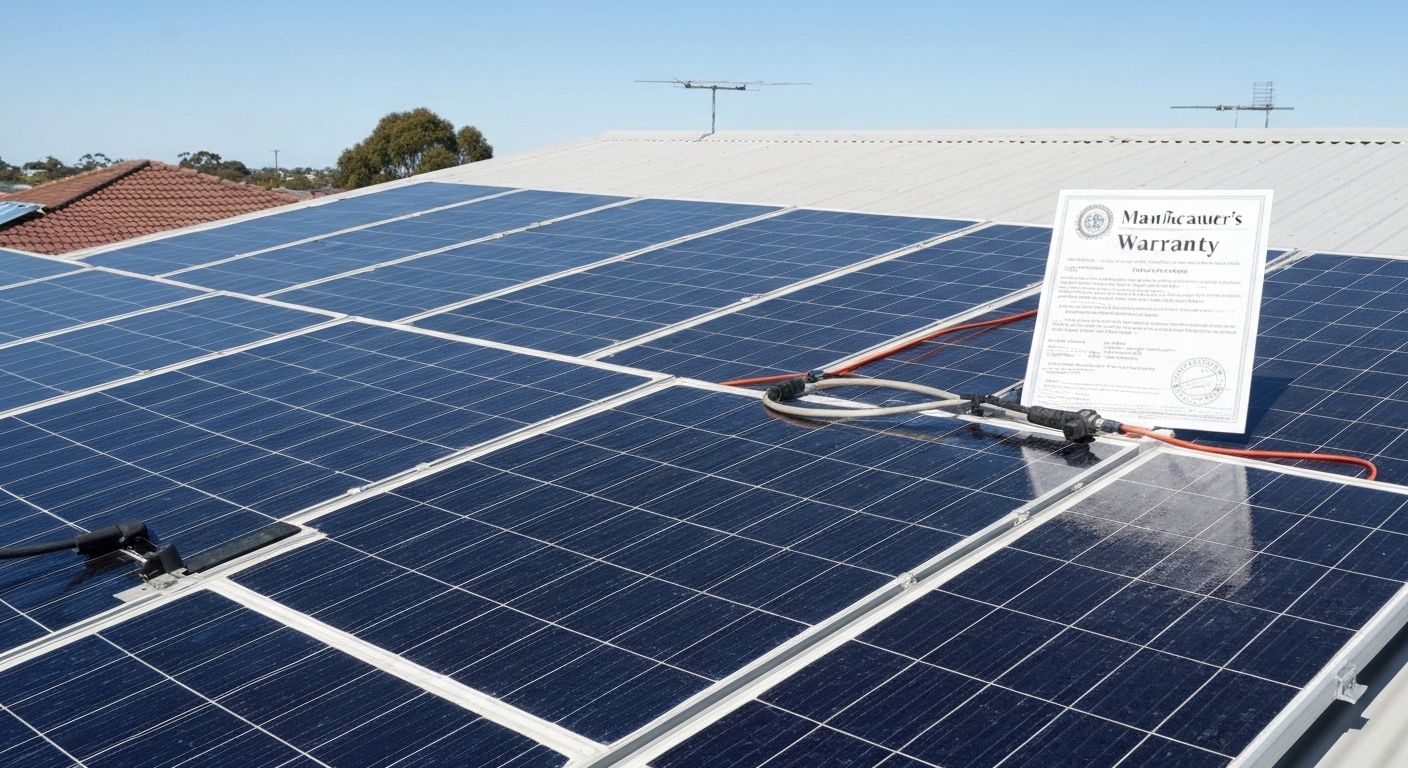
Australia has over 4.2 million rooftop solar installations. Each system comes with manufacturer warranties — typically a 10–12 year product warranty and a 25–30 year performance warranty. These coverage commitments are worth $5,000–$15,000 per household.
Most solar owners don’t know these warranties come with maintenance obligations. Get the solar panel warranty cleaning requirements wrong, and you may face a claim denial when you need coverage most.
This guide explains exactly what Australia’s major solar panel manufacturers require for warranty-compliant cleaning.
Key Takeaways
- Most solar panel warranties require regular cleaning using approved methods.
- Not cleaning panels can void your warranty coverage. Always read the warranty terms.
- Never use pressure washers. They damage panels and void warranties.
- Use clean, soft water and a soft cloth or brush only.
- Keep a record of every clean. Note the date and method used.
- Some warranties last 25 years. Good cleaning habits protect that investment.
Understanding Solar Panel Warranty Cleaning Requirements
Solar panel warranty cleaning requirements appear in the “Care and Maintenance” or “Operating Conditions” section of your warranty document. Most manufacturers include four key requirements:
- Panels must be kept reasonably clean
- Cleaning must use approved methods and materials only
- Damage from improper cleaning voids warranty coverage
- Performance guarantees assume you maintain panels per the guidelines
The specific language varies by brand. But the principle stays consistent: the warranty assumes you’re doing your part to maintain the panels.
Why Solar Panel Warranty Cleaning Requirements Matter
Your solar panels cost thousands of dollars. The warranties protect that investment. But warranties aren’t automatic — they require you to meet specific conditions.
Here’s what happens when you ignore solar panel warranty cleaning requirements:
- Dirt, bird droppings, and pollen build up on panels
- Biological growth (lichen, algae) establishes and etches the glass
- Long-term power output drops below the warranty threshold
- You make a performance warranty claim
- The manufacturer inspects and finds soiling damage
- The manufacturer denies your claim citing “failure to maintain”
This isn’t hypothetical. It’s a documented pattern in Australian warranty disputes.
What Australia’s Major Manufacturers Require
LG Solar (LG Neon, Bifacial Series)
LG’s installation manual specifies these solar panel warranty cleaning requirements:
- Clean with soft cloth or soft brush and clean water only
- Distilled or deionised water strongly recommended
- Never use detergents containing solvents, abrasives, or acid
- Avoid cleaning when panels are hot (prevents thermal shock)
- Pressure cleaning not recommended
LG’s performance warranty excludes degradation from “inadequate cleaning or soiling damage.”
SunPower (Maxeon Series)
SunPower’s maintenance documentation states:
- Use purified or deionised water with a soft-bristle brush
- Never use ammonia-based, abrasive, or strongly alkaline cleaners
- High-pressure water blasting voids warranty coverage
- Clean during cooler parts of the day only
Canadian Solar
Canadian Solar’s warranty cleaning requirements include:
- Clean with water and a mild, non-abrasive, non-detergent cleaner or water only
- Pressure washing is not recommended
- Avoid cleaning in freezing temperatures or extreme heat
- A soft cloth or brush is required — no abrasive materials
Jinko Solar
Jinko’s documentation covers:
- Deionised or purified water with mild neutral detergent if needed
- No acids, alkalis, or organic solvents
- No high-pressure washing
- Clean early morning or evening to avoid thermal shock
REC Solar
REC specifies these solar panel warranty cleaning requirements:
- Clean with clean water and a non-abrasive cloth or brush
- Distilled or deionised water preferred (avoids mineral deposits)
- No acid, alkaline, or abrasive cleaners
- Clean outside peak temperature hours
Tier-1 Chinese Manufacturers (JA Solar, LONGi, Trina, Risen)
Most tier-1 Chinese manufacturers follow similar guidelines:
- Deionised or purified water preferred
- Soft brushes or cloths only
- No abrasives, solvents, acids, or ammonia
- No high-pressure washing
- Temperature timing requirements
Product Warranty vs Performance Warranty: Key Differences
Solar panels come with two types of warranty. Understanding both helps you meet solar panel warranty cleaning requirements correctly.
Product/Materials Warranty (typically 10–12 years): Covers manufacturing defects, material failures, and premature physical breakdown. Cleaning-related damage claims under this warranty require proof of damage caused by incorrect cleaning methods.
Performance/Power Output Warranty (25–30 years): Guarantees the panel will produce above a certain output threshold (usually 80% after 25 years). This is where solar panel warranty cleaning requirements matter most. Chronic under-maintenance creates permanent output reduction that may not be covered.
For Australian consumers, the Australian Consumer Law (ACL) provides additional protection through consumer guarantees. However, the ACL’s “reasonable care” expectation still requires proper maintenance.
Cleaning Methods That Void Solar Panel Warranties
Every manufacturer lists prohibited cleaning methods. Here’s what voids most solar panel warranties:
Pressure washing: All major manufacturers either prohibit or strongly advise against it. Pressure water causes panel micro-cracking, seal damage, and anti-reflective coating disruption.
Abrasive scrubbing pads: Steel wool, scouring pads, and abrasive sponges scratch the glass surface and void warranty coverage.
Ammonia-based cleaners: Products like Windex contain ammonia that degrades panel seals and coatings.
Acidic or alkaline cleaners: Strong pH cleaners etch the glass and damage the anti-reflective coating.
Hard water repeatedly used: Tap water leaves mineral deposits that embed in the surface over time.
Cleaning hot panels: Spraying cold water on hot panels causes thermal shock and micro-cracking.
How to Meet Solar Panel Warranty Cleaning Requirements
1. Know Your Panel Brand and Model
Start by identifying exactly what panels you have. Check your original installation papers or look at the panel label (usually on the back frame). If you can’t find it, your installer or CEC accreditation certificate will list the equipment.
2. Download the Manufacturer’s Maintenance Manual
Visit the manufacturer’s website. Search for your panel model’s “installation and operation manual” or “maintenance guide.” These are usually free PDFs. Print or save the cleaning section. This document contains your specific solar panel warranty cleaning requirements.
3. Maintain a Cleaning Record
Keep receipts from professional cleaning services. For DIY cleans, keep a simple log. Note the date, products used, and what you observed. If you ever make a warranty claim, this documentation proves you met your maintenance obligations.
4. Use Approved Products Only
Stick to deionised water and soft brushes. These meet solar panel warranty cleaning requirements for all major brands. If you want to use a commercial solar cleaner, contact your manufacturer first to confirm it’s approved.
5. Never Pressure Wash
Every major manufacturer either prohibits or advises against pressure washing. The risk of panel micro-cracking, seal damage, and coating disruption is real. It’s one of the most common causes of warranty claim disputes.
6. Time Your Cleaning Correctly
Clean panels early morning or late afternoon. Avoid cleaning in the middle of hot days. Cold water on hot panels causes thermal shock that can crack cells.
7. Use the Right Water
Deionised or distilled water is best. It leaves no mineral deposits. If you use tap water, do a final rinse with deionised water.
How Often Should You Clean to Meet Warranty Requirements?
Solar panel warranty cleaning requirements vary by manufacturer and location. Here are general guidelines:
Minimum for all areas: 1–2 times per year
Coastal areas (salt spray exposure): 3–4 times per year
Rural/agricultural areas (heavy dust, pollen): 3–4 times per year
Urban areas (low pollution): 2 times per year
High bird activity areas: 2–4 times per year (or as needed)
Some manufacturers specify minimum frequencies in their warranty documents. Always check your specific brand’s requirements.
Protecting Your Warranty: A Step-by-Step Checklist
Follow these steps to ensure you meet solar panel warranty cleaning requirements:
Before cleaning:
- Check weather forecast (avoid extreme heat or cold)
- Review your manufacturer’s manual
- Gather approved materials (deionised water, soft brush)
- Plan to clean early morning or late afternoon
During cleaning:
- Use gentle pressure only
- Work from top to bottom
- Rinse thoroughly with clean water
- Check for any physical damage while cleaning
After cleaning:
- Record the date and method in your log
- Take photos if you notice any damage
- Store receipts if using professional services
- Schedule your next clean based on your area’s needs
Professional vs DIY: What Your Warranty Allows
Most solar panel warranty cleaning requirements allow both professional and DIY cleaning. The key is using correct methods.
DIY cleaning is acceptable if you:
- Use deionised water and soft brushes
- Avoid all prohibited products and methods
- Follow temperature and timing guidelines
- Keep records of each clean
Professional cleaning is recommended if:
- Your roof is steep or difficult to access safely
- You want documented proof for warranty purposes
- Your panels have heavy soiling requiring specialised equipment
- You’re unsure about correct methods
Professional solar cleaning services understand solar panel warranty cleaning requirements. They provide dated invoices that serve as warranty documentation.
The Soiling-Related Degradation Pathway
Understanding how poor cleaning affects warranty claims helps you appreciate why solar panel warranty cleaning requirements exist:
Stage 1 (Months 0-12): Panels accumulate normal dust and pollen. Output drops 2-5%. Easily reversible with cleaning.
Stage 2 (Months 12-36): Particulate soiling embeds in the anti-reflective coating. Bird droppings create localised hot spots. Output drops 5-10%. Still reversible but requires thorough cleaning.
Stage 3 (Years 3-10): Biological growth (lichen, algae) establishes. Mineral deposits etch the glass surface. Output drops 10-20%. May not be fully reversible.
Stage 4 (Years 10+): Permanent surface damage reduces output below warranty threshold. Manufacturer inspection reveals chronic soiling damage. Warranty claim denied due to failure to maintain.
Meeting solar panel warranty cleaning requirements stops this progression at Stage 1.
What to Do Before Making a Warranty Claim
If you need to make a warranty claim, proper documentation of meeting solar panel warranty cleaning requirements is crucial:
Gather this evidence:
- All cleaning records with dates
- Professional cleaning invoices (if applicable)
- Photos showing panel condition
- Your manufacturer’s maintenance manual (with cleaning section highlighted)
- Original warranty documents
Avoid these mistakes:
- Don’t attempt aggressive cleaning just before inspection
- Don’t claim you’ve maintained panels if you haven’t kept records
- Don’t argue with the inspector — present documentation calmly
A documented history of meeting solar panel warranty cleaning requirements gives you the strongest position in any warranty dispute.
State-Specific Considerations in Australia
Different Australian environments affect solar panel warranty cleaning requirements:
Queensland and Northern NSW: High humidity and rainfall support biological growth. More frequent cleaning needed (3-4 times yearly).
Coastal areas (all states): Salt spray accelerates soiling and corrosion. Frequent cleaning with deionised water essential (3-4 times yearly).
Inland NSW, VIC, SA: Dust and agricultural particulates are main concerns. Regular cleaning needed during dry seasons (2-3 times yearly).
Perth and WA: Dry climate with occasional dust storms. Cleaning after dust events plus regular maintenance (2-3 times yearly).
Tasmania: Lower soiling rates but more lichen growth due to humidity. Regular cleaning needed (2 times yearly minimum).
Adjust your cleaning frequency based on your location to meet solar panel warranty cleaning requirements.
Common Myths About Solar Panel Warranty Cleaning Requirements
Myth 1: “Rain cleans solar panels sufficiently.” False. Rain removes loose dust but doesn’t remove bird droppings, pollen, or mineral deposits. All manufacturers require active cleaning beyond rainfall.
Myth 2: “Any cleaning counts as maintenance.” False. Using prohibited methods (like pressure washing) can void your warranty even if you clean regularly. Only approved methods count.
Myth 3: “Professional cleaning is required.” Mostly false. DIY cleaning is acceptable if you follow the manufacturer’s guidelines. Professional cleaning simply provides better documentation.
Myth 4: “Cleaning once when I notice dirt is enough.” False. Most solar panel warranty cleaning requirements specify regular maintenance, not reactive cleaning. Waiting until panels are heavily soiled may be considered inadequate maintenance.
Myth 5: “My installer said I never need to clean.” False. Check your manufacturer’s warranty document directly. Some installers give incorrect advice. The warranty document is the legal requirement.
The Cost of Ignoring Solar Panel Warranty Cleaning Requirements
Failing to meet solar panel warranty cleaning requirements has real financial consequences:
Lost warranty coverage: $5,000–$15,000 in potential claims
Reduced output: 10-30% power loss over time equals hundreds of dollars annually
Permanent damage: Etched glass and coating damage can’t be reversed
Replacement costs: Out-of-warranty panel replacement costs $150–$350 per panel
Total potential loss: $10,000–$25,000 over the life of your system
Meeting solar panel warranty cleaning requirements costs $150–$400 per year (professional service) or $50–$100 per year (DIY materials). The protection is worth far more than the cost.
Manufacturer-Specific Cleaning Requirements: A Reference Guide
Different manufacturers have different requirements. Here’s a detailed summary of solar panel warranty cleaning requirements from Australia’s most commonly installed panel brands:
SunPower (Maxeon panels): Recommends cleaning with lukewarm water and a soft cloth or sponge. States that “abrasive cleaners and high-pressure washing can damage the panel surface and void the warranty.” SunPower recommends annual inspection by an authorised cleaner and offers a list of approved cleaning products on their website.
Canadian Solar: Cleaning guide specifies water and mild soap with a soft brush or sponge. High-pressure water jets are explicitly “not recommended.” The manual notes that cleaning during peak sunlight hours (when panels are hot) should be avoided due to thermal shock risk. Records of cleaning frequency are not required by warranty but are recommended.
JA Solar: Recommends cleaning with clean water and a soft brush. Chemical cleaners should be “neutral pH” (pH 6–8). Specifically prohibits solvents, corrosives, and abrasives. No minimum cleaning frequency is specified, but the warranty excludes damage caused by “lack of proper maintenance.”
Trina Solar: States that panels should be cleaned “periodically with water and a soft brush or cloth.” Emphasises using “deionised or distilled water” for final rinsing in hard water areas. Pressure washing is prohibited. Like most manufacturers, warranty is conditional on panels being installed and maintained per the product manual.
LG Solar / LG Neon (discontinued but widely installed): Required soft cloth or sponge with clean water. Mild detergent was permitted. LG’s 25-year warranty had a specific clause that damage from “improper cleaning methods” was excluded, and that warranty service could require proof of maintenance records in case of dispute.
Longi Solar: Recommends cleaning 2–4 times per year depending on environment. Cleaning must use “clean water and soft materials.” Notes that cleaning intervals should increase in “dusty, agricultural, or coastal environments.” High-pressure cleaning voids the product warranty.
The Importance of Cleaning Records for Warranty Claims
If you ever need to make a warranty claim, a record of meeting solar panel warranty cleaning requirements can be decisive.
What to record:
- Date of each clean
- Method used (DIY or professional)
- Products used (e.g., “distilled water + mild dish soap”)
- Any observations (areas of particular soiling, any physical damage noticed)
- For professional cleans: keep the invoice as documented proof
A simple spreadsheet or phone note is sufficient. For homeowners who use professional solar cleaning services, most companies provide dated invoices with service summaries. File these with your solar system documentation.
In warranty disputes, this record demonstrates “due diligence” — that you’ve maintained the product to a reasonable standard. Without it, a manufacturer can more easily argue the fault arose from neglect.
Sources
This article references manufacturer warranty documents and maintenance guidelines from the following sources:
- Australian Energy Council (2024). “Solar Panel Warranty Terms and Conditions — Industry Standards.” Available at energycouncil.com.au
- Clean Energy Council (2025). “Solar PV Installation and Maintenance Standards.” CEC Installation Guidelines Document CEC-INST-2025-02
- LG Electronics (2023). “LG NeON Solar Module Installation and Operation Manual.” Document reference LG-SOLAR-IOM-2023
- SunPower Corporation (2024). “Maxeon Solar Panel Warranty and Maintenance Guide.” Document reference SP-MAX-WARRANTY-2024
- Canadian Solar Inc. (2024). “Product Warranty Terms — Australian Market.” CS-AU-WARRANTY-2024
- Consumer Affairs Victoria (2025). “Understanding Your Rights: Solar Panel Warranties Under Australian Consumer Law.” Consumer.vic.gov.au
Related: What Voids a Solar Panel Warranty? · Pressure Washing Solar Panels · Solar Panel Cleaning Cost
Frequently Asked Questions
Do solar panel warranties require regular cleaning?
Yes — most major manufacturers require that panels be kept ‘reasonably clean’ and that cleaning follow their specified methods (typically deionised water and soft brushes). Failure to maintain panels can be used to deny warranty claims for soiling-related degradation.
What cleaning methods void solar panel warranties?
Pressure washing above 35 bar, abrasive scrubbing pads, ammonia-based cleaners (like Windex), acidic cleaners, high-alkaline detergents, and tap water used repeatedly (mineral deposits) are all cited by manufacturers as methods that can void warranties.
Does DIY solar panel cleaning void my warranty?
DIY cleaning doesn’t automatically void your warranty — but using incorrect products or methods does. If you follow the manufacturer’s cleaning guidelines (deionised water, soft brush, correct timing), DIY cleaning is generally acceptable. Document your cleans in case of a warranty claim.
How do I find my solar panel’s specific cleaning requirements?
Download the installation and maintenance manual from your panel manufacturer’s website, or search ‘[brand name] solar panel installation manual PDF’. The cleaning section is usually in the ‘Maintenance’ or ‘Care’ section. Your original installer may also have a copy.
What happens if I make a warranty claim on soiled panels?
If your panels show soiling-related degradation and you can’t provide evidence of maintenance (cleaning records, professional invoices), the manufacturer may decline the claim under a ‘failure to maintain’ provision. Keeping receipts from professional cleans is important.
How often must I clean solar panels to maintain warranty coverage?
Most manufacturers recommend cleaning 2-4 times per year. Coastal and rural areas with heavy dust, salt spray, or bird activity may need more frequent cleaning. Check your warranty document for specific requirements — some explicitly state minimum cleaning frequencies.
Frequently Asked Questions
Yes — most major manufacturers require that panels be kept 'reasonably clean' and that cleaning follow their specified methods (typically deionised water and soft brushes). Failure to maintain panels can be used to deny warranty claims for soiling-related degradation.
Pressure washing above 35 bar, abrasive scrubbing pads, ammonia-based cleaners (like Windex), acidic cleaners, high-alkaline detergents, and tap water used repeatedly (mineral deposits) are all cited by manufacturers as methods that can void warranties.
DIY cleaning doesn't automatically void your warranty — but using incorrect products or methods does. If you follow the manufacturer's cleaning guidelines (deionised water, soft brush, correct timing), DIY cleaning is generally acceptable. Document your cleans in case of a warranty claim.
Download the installation and maintenance manual from your panel manufacturer's website, or search '[brand name] solar panel installation manual PDF'. The cleaning section is usually in the 'Maintenance' or 'Care' section. Your original installer may also have a copy.
If your panels show soiling-related degradation and you can't provide evidence of maintenance (cleaning records, professional invoices), the manufacturer may decline the claim under a 'failure to maintain' provision. Keeping receipts from professional cleans is important.
Most manufacturers recommend cleaning 2-4 times per year. Coastal and rural areas with heavy dust, salt spray, or bird activity may need more frequent cleaning. Check your warranty document for specific requirements — some explicitly state minimum cleaning frequencies.