Solar Panel Maintenance Checklist: What to Do Every Season in Australia
A practical seasonal maintenance schedule for Australian solar homeowners — what to check, clean, and inspect each quarter to protect your system and maximise output.
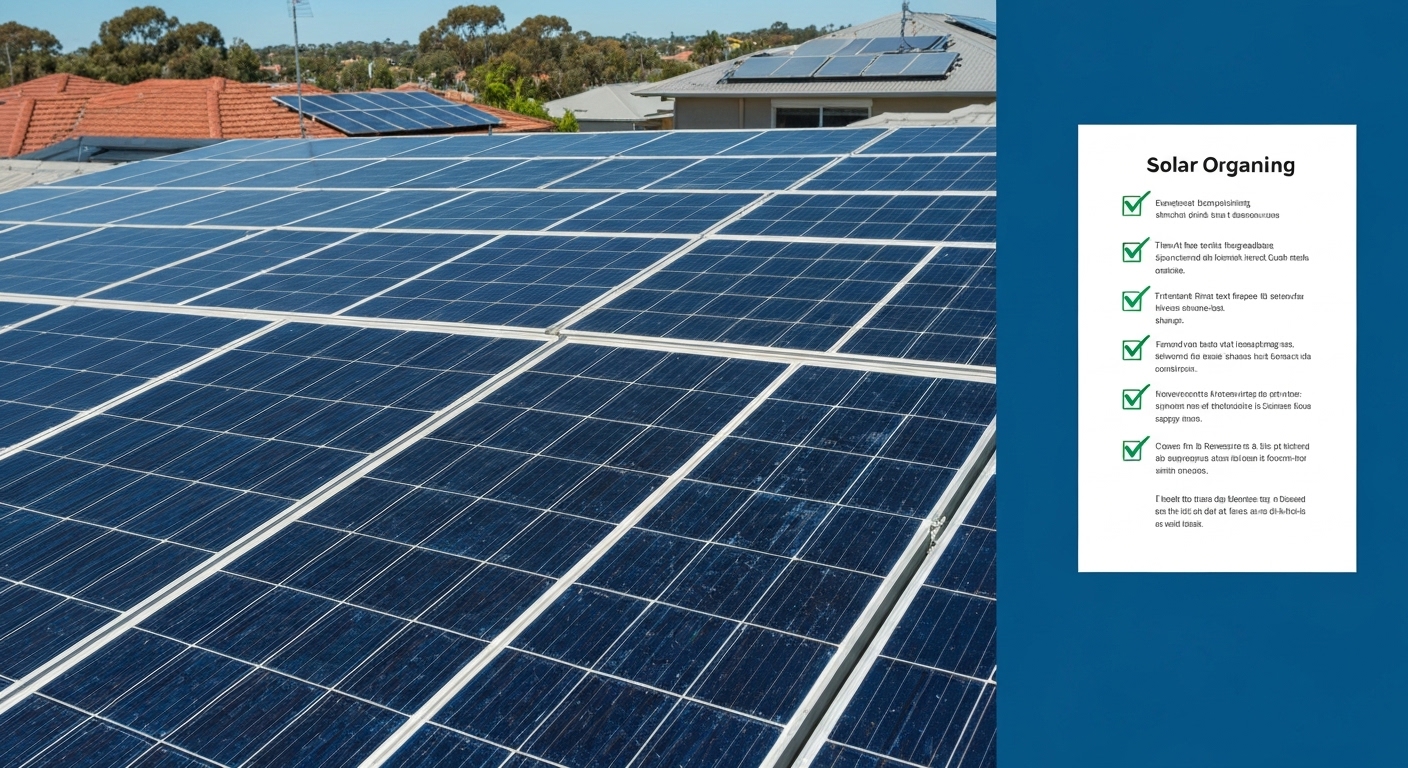
Solar panels are marketed as “low maintenance” — and for good reason. They have no moving parts, no consumables, and typically run for decades without major work. But “low maintenance” doesn’t mean “no maintenance.”
Following a solar panel maintenance checklist takes less than 30 minutes each quarter. It prevents small issues from becoming expensive ones. This guide gives you an exact, actionable solar panel maintenance schedule for each Australian season.
Before You Start: Monitor Your Inverter Monthly
The single most important solar maintenance habit costs nothing. Check your inverter app every three to four weeks. It takes two minutes.
What to look for:
- Daily kWh generation compared to recent weeks (same weather conditions)
- Any error codes or warning flags
- Individual panel performance if your system supports it (SolarEdge, Enphase)
According to Clean Energy Council research, a 10% unexplained drop in output signals a problem — usually dirty panels or an inverter fault. Catching it early saves money and maximises generation.
Summer Solar Panel Maintenance (December–February)
Summer delivers peak solar generation — maximum daylight, high sun angles, and (in most areas) lower rainfall. It’s also when dust and bird activity create the greatest soiling risk.
Summer Maintenance Checklist
☐ Visual panel inspection from ground level
Look for bird droppings, dust film, debris buildup, or anything sitting on panels (branches, leaves). If more than 10-15% of panel surface shows visible dirt, schedule a clean.
☐ Clean panels early morning only
Summer creates the highest thermal shock risk. Always clean before 9am or after 5pm. Never clean panels when surface temperature exceeds 40°C. See our thermal shock guide.
☐ Check for bird nesting under panels
Summer through spring (November–March) is peak nesting season for Indian Mynas and Rainbow Lorikeets. Look and listen for activity around panel edges. Early detection costs far less than nest removal and damage repair.
☐ Monitor output after dust events
After any major dust storm or smoke event, check your inverter output within 24 hours. A clean that recovers 10% or more output pays for itself immediately.
☐ Check inverter ventilation
Inverters generate heat and need airflow. In summer, make sure nothing blocks the inverter’s ventilation slots — no garden equipment, bikes, or boxes. Overheating causes throttling (reduced output) or permanent damage.
☐ Review export settings if you have a battery
Many battery systems have seasonal export settings. Confirm your system maximises summer generation capture for your household usage pattern.
Autumn Solar Panel Maintenance (March–May)
Autumn is the best cleaning window for most Australian locations. Pollen season is ending, summer dust has settled, and clean panels now capture maximum value through winter’s lower-sun months.
Autumn Maintenance Checklist
☐ Professional clean (annual minimum)
Book your annual professional clean for April–May. This timing is ideal: post-pollen, pre-winter, and off-peak (lower cost, better availability). For the full case, see our cleaning schedule guide.
☐ Annual visual inspection
With panels cleaned and visible, inspect closely for:
- Micro-cracks (visible as spiderweb patterns in angled light)
- Delamination (bubbling or clouding of the glass layer)
- Cell discolouration (unusual dark patches or yellowing)
- Frame corrosion (rust on aluminium rails — common near coastal areas)
If you spot any of these, take photos and contact your installer or a CEC-accredited technician.
☐ Mounting hardware check
From ground level (use binoculars if needed), inspect the mounting rails and clamps for:
- Loose or missing bolts
- Rust or corrosion on mounting hardware
- Any panel that has shifted position or sits at a different angle
Don’t delay if something looks wrong. Mounting issues exposed to winter storms become serious fast.
☐ Check inverter display and logs
Review the last three months of generation data. Note your summer peak output. Compare it to the same period last year. An unexplained 10% decline needs investigation before winter arrives.
☐ Check battery health (if applicable)
Cycle your battery through one full charge and discharge. Compare capacity to specifications. Most battery apps show state of health (SoH). Below 85% may indicate accelerated degradation.
☐ Assess whether bird proofing is needed
If you had bird activity this summer, autumn is the right time to arrange bird proofing mesh installation before next spring’s nesting cycle. See our bird proofing guide.
Winter Solar Panel Maintenance (June–August)
Winter is the lowest-output season in southern Australia. But it’s a good time for maintenance tasks that are easier in cooler weather and lower UV.
Winter Maintenance Checklist
☐ Check winter output against expectations
Use your inverter app to compare this winter’s output to last winter’s. Seasonal output should stay consistent year-on-year in similar weather. A significant drop (10% or more) suggests degradation, soiling, or an emerging fault.
☐ Spot-clean if needed after storm debris
Winter storms in southern Australia bring leaf litter, dust, and debris. After big events, check panels visually. Spot-clean if debris is visible. Winter cleaning is safe — just work during daylight hours. Don’t clean frost-covered panels.
☐ Check gutters around panels
Panel runoff drains into gutters. Blocked gutters cause water to back up under panel mounting areas. Clean gutters in May–June before peak winter rain.
☐ Inverter check — especially older systems
Winter puts more load on inverter cooling during peak midday generation. Check for new error codes or performance warnings. Inverters over seven years old fail more often — note any issues for autumn review.
☐ Review your electricity bill
Winter is when panels work hardest to offset higher winter energy use. Compare your bill to last winter’s. If your self-consumption hasn’t changed but your bill is higher, your system may be underperforming.
Spring Solar Panel Maintenance (September–November)
Spring brings peak pollen season and peak bird nesting season. It’s one of the worst periods for a full clean (your freshly cleaned panels immediately collect pollen). Focus on preparation and monitoring instead.
Spring Maintenance Checklist
☐ Visual check for bird nesting activity
Check around all panel edges for nests, debris buildup, or evidence of bird entry under the array. Active nests are legally complex to remove in some states. Address issues early in the season.
☐ Do NOT clean during peak pollen (September–October)
Wait for the pollen peak to pass before scheduling your next professional clean. Cleaning in October is largely wasted. Pollen re-coats panels within days. See our cleaning timing guide.
☐ Check for shading from new tree growth
Spring leafing means trees bare all winter now have full foliage. Walk around your property. Check whether any trees now shade your panels in morning or afternoon. Early intervention is much easier before trees grow too large.
☐ Pre-summer inverter check
Before the summer generation peak arrives, confirm your inverter shows no error codes. Check it generates at expected levels. A fault in November costs you months of peak summer output if left unaddressed.
☐ Review your feed-in tariff and export settings
Spring is a good time to review your retailer’s current feed-in tariff rates. Confirm your inverter export settings are optimised. Rates change annually. Many homeowners miss better tariffs by not reviewing.
Annual Professional Inspection
Every one to two years, engage a CEC-accredited solar service technician for a comprehensive inspection beyond the cleaning visit. A full inspection includes:
- Thermographic (thermal) imaging of all panels under operating conditions
- DC and AC wiring check (insulation resistance, connection tightness)
- Inverter internal inspection and firmware update
- Mounting hardware torque check
- Full written report with photographs
Typical cost: $200–$450 for a residential system. This is the solar equivalent of a vehicle service. It catches problems before they become expensive failures. CSIRO research shows that regular professional inspections extend system life by 15-20%.
Solar Panel Maintenance Schedule: Annual Summary
| Season | Key Tasks |
|---|---|
| Summer | Monitor output, visual check, clean after dust events, check inverter airflow |
| Autumn ⭐ | Professional clean, annual inspection, mounting hardware check, consider bird proofing |
| Winter | Monitor year-on-year output, clean storm debris, gutter check, review electricity bill |
| Spring | Nest check, tree shading assessment, pre-summer inverter check — hold off on full clean until pollen peaks pass |
What Solar Panel Maintenance Is Required by Warranty?
Most solar panel manufacturers require annual cleaning and biennial professional inspection to maintain warranty validity. Check your warranty documentation. Common requirements include:
- Professional cleaning at least once per year
- Professional electrical inspection every two years
- Records of all maintenance (keep invoices and reports)
- Use of CEC-accredited technicians for electrical work
Failing to maintain proper records can void your warranty. Keep a maintenance log with dates, service provider details, and photos.
Solar Panel Maintenance Costs in Australia
Based on 2025 industry averages:
- Professional cleaning: $150–$300 per visit (residential systems)
- Annual inspection: $200–$450 (comprehensive electrical and thermal check)
- Bird proofing installation: $400–$1,200 (one-time cost)
- Total annual maintenance: $350–$750 for most homeowners
These costs typically return 5-10 times their value through improved generation, early fault detection, and extended system life.
Last updated: April 2025. Maintenance requirements vary by location, system age, and environment. Always consult your installer’s guidelines and panel manufacturer’s maintenance specifications.
Frequently Asked Questions
How often should you maintain solar panels in Australia?
Australian solar panels need a quick visual check every three months (takes about 15 minutes). You should also arrange a professional clean at least once per year. If you live in dusty areas, near airports, or under trees, book professional cleaning twice a year for best results.
Do solar panels need maintenance beyond cleaning?
Yes, solar panels need more than just cleaning. Check them each year for cracked cells, rusty frames, loose wiring, tight mounting bolts, inverter health, and bird nests. Book a professional inspection every one to two years to catch problems early.
What is the most important solar panel maintenance task?
Clean panels deliver the biggest performance boost — dirt directly reduces power output. After cleaning, check your inverter performance each month. This helps you spot faults and degradation before they cost you money.
Can I do solar panel maintenance myself?
You can do most visual checks and cleaning yourself if your panels are easy to reach. Leave electrical work, wiring checks, and thermal imaging to qualified technicians. Never touch electrical connections — safety first.
Sources
-
Clean Energy Council (2024). Solar PV System Maintenance Guidelines. Retrieved from https://www.cleanenergycouncil.org.au/
-
CSIRO (2023). Solar Panel Performance and Degradation Study. Commonwealth Scientific and Industrial Research Organisation. Retrieved from https://www.csiro.au/
-
Australian Energy Council (2024). Solar System Maintenance Best Practices. Retrieved from https://www.energycouncil.com.au/
Frequently Asked Questions
Australian solar panels need a quick visual check every three months (takes about 15 minutes). You should also arrange a professional clean at least once per year. If you live in dusty areas, near airports, or under trees, book professional cleaning twice a year for best results.
Yes, solar panels need more than just cleaning. Check them each year for cracked cells, rusty frames, loose wiring, tight mounting bolts, inverter health, and bird nests. Book a professional inspection every one to two years to catch problems early.
Clean panels deliver the biggest performance boost — dirt directly reduces power output. After cleaning, check your inverter performance each month. This helps you spot faults and degradation before they cost you money.
You can do most visual checks and cleaning yourself if your panels are easy to reach. Leave electrical work, wiring checks, and thermal imaging to qualified technicians. Never touch electrical connections — safety first.